
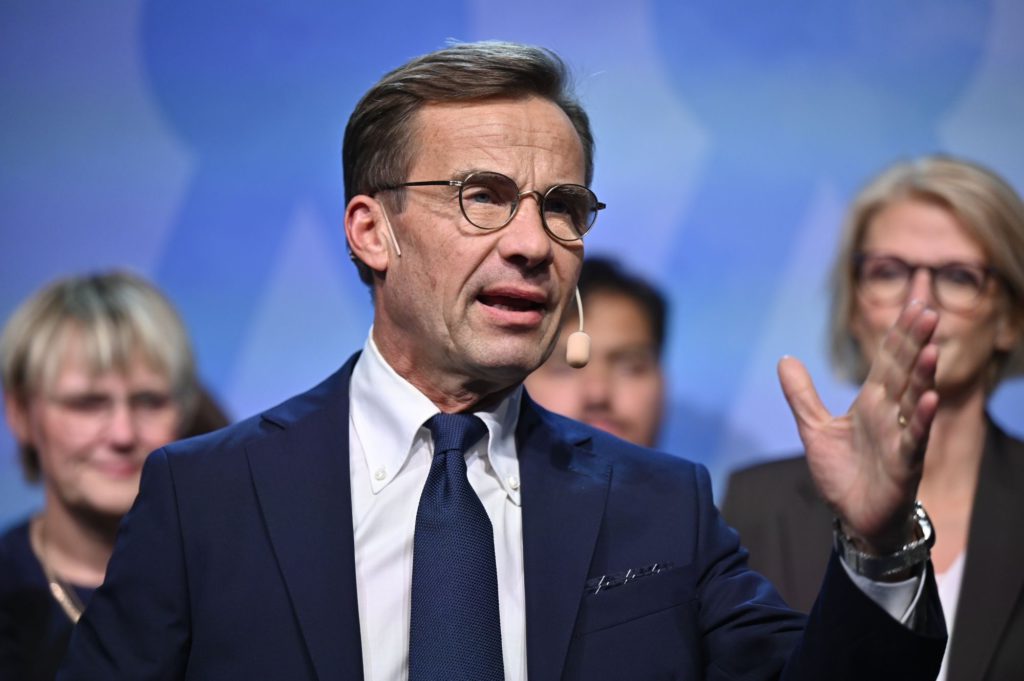
Swedish right-wing opposition parties are intensifying negotiations on forming a new government, after Prime Minister Magdalena Andersson announced her resignation on Wednesday.
(Bloomberg) — Swedish right-wing opposition parties are intensifying negotiations on forming a new government, after Prime Minister Magdalena Andersson announced her resignation on Wednesday.
Andersson is set to formally resign on Thursday, a day after conceding defeat in Sunday’s election, and Moderate Party leader Ulf Kristersson will now try to forge an agreement with three parties that backed his candidacy. They include the nationalist Sweden Democrats, who are now the country’s second largest political force after Andersson’s Social Democrats.
The main obstacle facing Kristersson as he seeks to take over Andersson’s job is to forge a common platform and square differences between the Sweden Democrats and the much smaller Liberals, which may seek to minimize the nationalists’ influence.
The formation of a new government took more than four months after the previous election, in 2018. This time, the process is expected to be more expedient, partly because it comes at a time when the country is facing a raft of challenges and is preparing to take over the European Union’s rotating six-month presidency.
Sweden will take the bloc’s leadership role in January, chairing meetings and setting the agenda just as unity among the union’s members is set to be put to test as countries come face to face with the reality of inadequate power supplies.
With voters anxious about a gang-fueled crime wave, the Sweden Democrats emerged as the election’s biggest winner after vowing to “make Sweden safe again,” by introducing longer prison terms and reducing immigration to a minimum. The opposition has also pledged to start the process of building new nuclear plants.
Read More: Swedish Nationalist Set to Take His Party From Pariah to Power
While the Sweden Democrats garnered more votes than the Kristersson’s Moderates, he is the top candidate for the premiership as a government led by nationalist leader Jimmie Akesson would be opposed by a majority in parliament.
Opposition parties have thus far been tight-lipped on their discussions, but Moderate Party secretary Gunnar Strommer said on Wednesday that talks initiated immediately after the election will now be accelerated, in order to form “a stable government with the ability to take action.”
The shift in power in the biggest Nordic country is taking place against a backdrop of recession fears, soaring inflation rates and concerns over adequate power supplies as the northern hemisphere heads into heating season and supplies of energy from Russia have been severely curtailed.
More stories like this are available on bloomberg.com
©2022 Bloomberg L.P.