
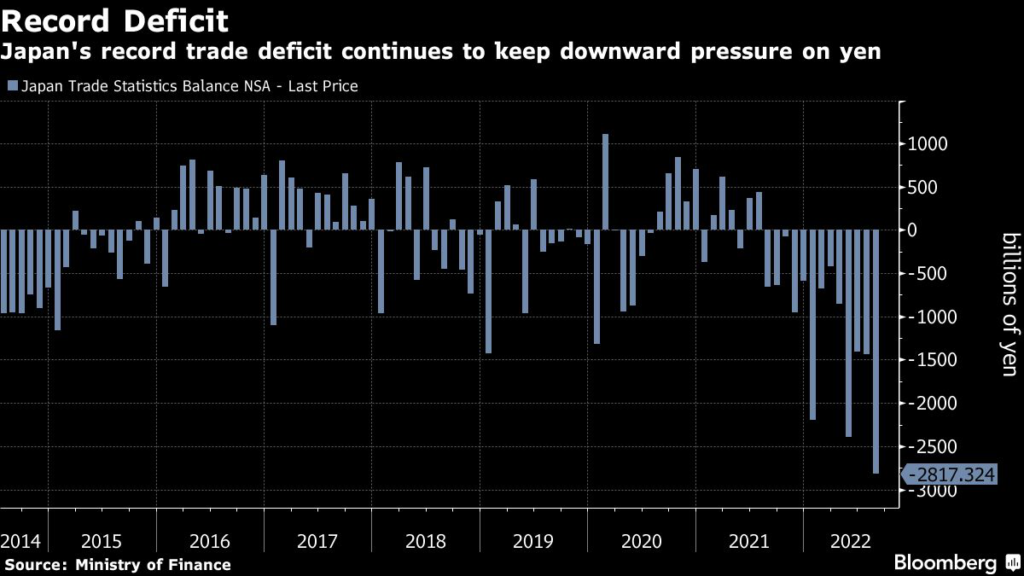
Japan’s trade deficit expanded to a record in August as a weak yen inflated the value of commodity imports.
(Bloomberg) — Japan’s trade deficit expanded to a record in August as a weak yen inflated the value of commodity imports.
The unadjusted trade deficit grew to 2.82 trillion yen ($19.7 billion), the finance ministry reported Thursday. Economists had expected a 2.39 trillion yen deficit. The balance has been in the red for 13 months, the longest stretch since 2015.
Imports rose 49.9% in value from a year ago, reaching a record, while exports increased 22.1%. Crude oil, coal, and liquid natural gas led inbound shipments.
The record trade gap adds to concerns over the strength of Japan’s economic recovery, as higher import costs for energy and food can cool consumption. A weaker yen fuels the deficit by making imports more expensive, and paying for those goods in yen also reinforces downward pressure on the Japanese currency.
So far Prime Minister Fumio Kishida has tapped fiscal spending measures to help households and businesses deal with inflation.
The trade report showed the average exchange rate was 135.08 yen against the dollar, 22.9% weaker than a year ago. The yen has lost around 20% this year against the dollar as the US Federal Reserve raises interest rates aggressively to contain rampant inflation while the Bank of Japan keeps them at rock-bottom levels.
Meanwhile, exports continue to gain from a year ago partly because of support from the cheap yen, but demand may cool in Japan’s key markets like the US and Europe as growth is expected to slow there.
For now the trade report showed exports to the US rose 33.8% compared to a year ago, and those to Europe gained 16.7%. Shipments to China grew 13.5%.
What Bloomberg Economics Says…
“Looking ahead, we expect the trade deficit to expand again in September. The yen’s plunge will likely inflate the import bill, while weaker global demand limits export growth.
— Yuki Masujima, economist
To read the full report, click here
The impact of rising import costs on consumers is closely watched by officials as it was consumer spending that drove Japan’s economic recovery to its pre-pandemic size in the three months through June.
(Updates with more details from the report)
More stories like this are available on bloomberg.com
©2022 Bloomberg L.P.