
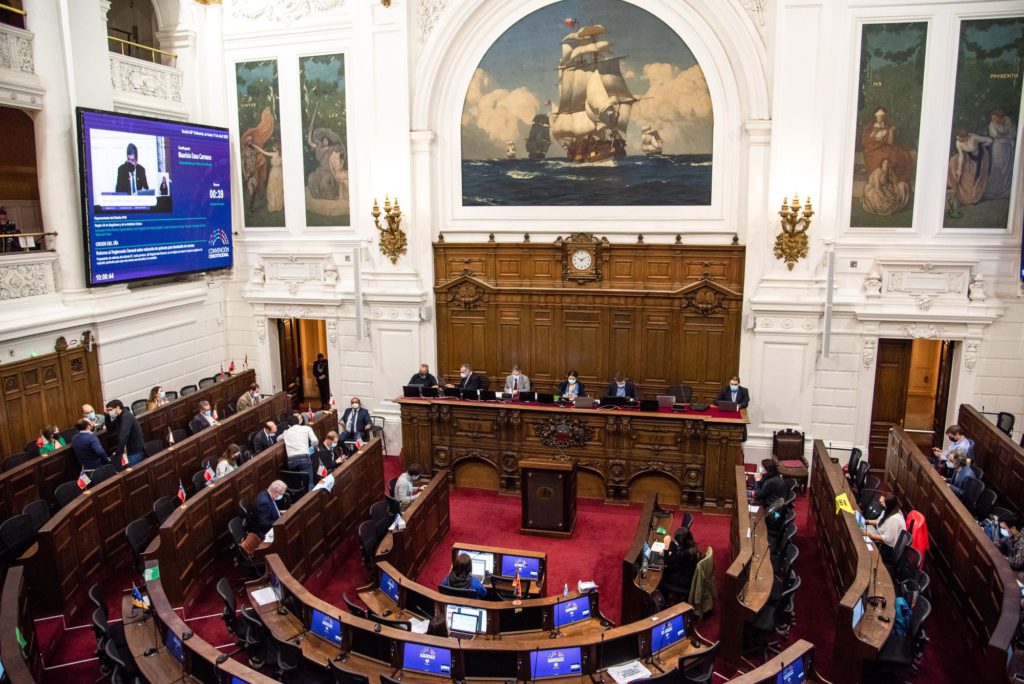
Chileans rejected a new constitution in a referendum Sunday, dealing a major blow to a three-year campaign to overhaul politics and temper free-market policies that made the deeply unequal society an investor darling.
(Bloomberg) — Chileans rejected a new constitution in a referendum Sunday, dealing a major blow to a three-year campaign to overhaul politics and temper free-market policies that made the deeply unequal society an investor darling.
With 48% of the ballots counted, 62.6% voted against a proposed charter drawn up over the past year by a popularly-elected convention, compared with just 37.4% for its approval.
Chilean markets are likely to rally Monday. While polls had anticipated that the current more business-friendly framework would be kept in place, they underestimated the margin.
The vote was meant to be the culmination of a movement that started with mass protests against inequality in late 2019. Instead, it’s the campaign’s first major defeat and a blow to President Gabriel Boric, 36, who was relying on the new charter to help reform the tax, pension and labor systems, boost social services and cut inequality. The current constitution dates back to the military dictatorship of Augusto Pinochet.
“This is a very significant political, ideological and strategic defeat for President Boric,” said Mauricio Morales, a professor of political science at Chile’s Universidad de Talca. “It will inevitably fracture the governing coalition.”
Risk On
A rejection scenario paves the way for Chile’s IPSA stock index to rise more than 10% in coming weeks, while the peso strengthens beyond 850 to the dollar, Leonardo Suarez, director of research at LarrainVial, wrote last week. In fixed income, investors are now likely to shift to riskier corporate bonds and longer-maturity Treasury notes, according to a Bloomberg survey.
Chile’s giant copper and lithium industries will also garner some relief given the proposed charter signaled tougher environmental and community rules.
All is not lost for Boric’s administration. The social movement behind the new constitution has convinced parties across the political spectrum that change is needed — if not the one proposed in this charter.
“The two positions have moved toward the center,” said Kenneth Bunker, political analyst at Santiago-based consulting firm Politico Tech Global. Now, “we are no longer talking about approving or rejecting the proposed constitution, but on how to reform the current charter. There is a growing political center that is likely to reach a solution after the vote.”
That could take the form of an election of a Constitution Convention and a second attempt at a new charter, as backed by Boric, or amendments to the existing document. Whichever the case, congress must approve the plan.
Next Steps
Lawmakers passed a bill in August that makes it easier to amend the current constitution, lowering the required legislative majority.
“The market will be anxious to see how the post-referendum stage unfolds and how debate is handled by political authorities,” said Martina Ogaz, an economist at Euroamerica.
Read More: Boric Faces Big Leadership Test in Chile Constitution Vote
Just 16 months ago, left-wingers and environmental activists dominated the election for the Constitutional Convention. Then, in December, Chileans voted in their most left-wing president in half a century, maintaining the push for change. That momentum is now ebbing away.
In the months prior to the vote, the draft was criticized not only by parties in the political right, but also by key figures from the center-left governments that ruled the country for two decades after the dictatorship ended in 1990.
Critics said the new charter would damp investment and growth, erode essential checks and balances on power and lead to a surge in fiscal spending. Those in favor applauded the inclusion of a swath of social rights, enhanced environmental protection and increased representation for women and indigenous groups.
More stories like this are available on bloomberg.com
©2022 Bloomberg L.P.