
South Korean inflation cooled more than expected in August as energy prices eased, reducing pressure on the central bank to deliver another outsized interest-rate increase in its yearlong tightening cycle.
(Bloomberg) — South Korean inflation cooled more than expected in August as energy prices eased, reducing pressure on the central bank to deliver another outsized interest-rate increase in its yearlong tightening cycle.
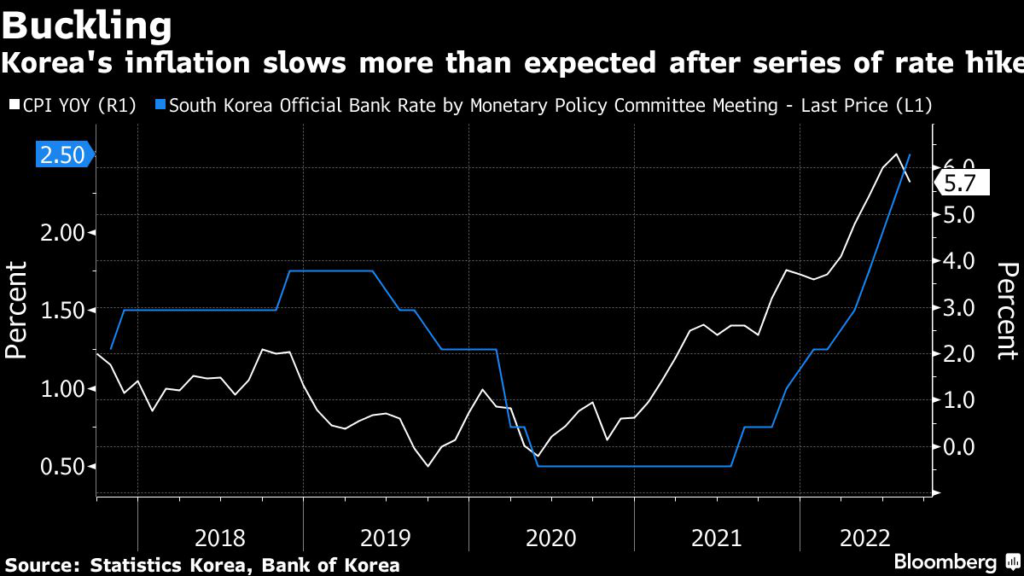
Consumer prices advanced 5.7% from a year earlier, slowing from July’s pace of 6.3% and coming in below economists’ estimate of 6.1%, statistics office data showed Friday. From the prior month, prices actually fell 0.1% in August, the first decrease since late 2020.
While the easing is positive, prices pressures remain significant and as a result the Bank of Korea is unlikely to be diverted from steadily tightening policy. Inflation is still running at almost three-times the bank’s 2% target and like much of the developed world, the BOK is determined to bring it under control.
Reflecting that view, the Finance Ministry said in a statement after the release that the cooling is mainly due to an easing of the oil price and cuts to fuel taxes. Inflation remains elevated and the government will stay guarded against price pressures, it said.
That was echoed by the BOK, which said the easing was is in line with expectations as oil prices drop, while adding that price pressures in services such as dining-out had increased somewhat. It forecast 5% to 6% inflation would remain for “a considerable period of time.”
Korean inflation has been led this year by a burst of consumer demand after Covid regulations were relaxed and a series of extra budgets spurred activity.
BOK Governor Rhee Chang-yong said at Jackson Hole last weekend that he would prioritize price concerns if inflation stayed elevated more than expected. He was among central bankers joining the Federal Reserve in reaffirming a willingness to keep focused on inflation over growth concerns.
“Inflation may fluctuate, but it’s unlikely to drop fast, given the costs of shipping and commodities stay elevated,” said Kim Sang-man, an analyst at Hana Securities Co.
“Wage hikes are also due and the currency is a big factor driving inflation. While the BOK has signaled no more outsized hikes, there’s an increasing chance it’ll take more baby steps longer.”
Inflation has put upward pressure on wages in Korea at a time when Russia’s prolonged war on Ukraine is keeping raw materials prices high. The won hovering around a 13-year-low has also made it more expensive to import energy, food and other items that the trade-reliant country needs.
Korea’s trade deficit came in at a record $9.5 billion in August, while export growth slowed further. Imports of energy and commodities required to assemble semiconductors and other key exports hit a record high, the trade ministry said Thursday.
The hawkish signals from Jackson Hole have prompted Citigroup Inc. and Goldman Sachs Group Inc. to raise their forecast year-end BOK rate to 3% from 2.75%.
The BOK has meetings in October and November remaining this year and its rate currently stands at 2.5%.
Today’s report also showed:
- Korea’s core inflation came in at 4.4% from a year earlier, slightly below economists’ 4.5% estimate
- Food and beverage prices rose 1.4% from a month earlier, contributing the most to inflation. From a year earlier, they increased 8%
- Transportation costs, influenced heavily by energy prices, fell 4.9% from a month earlier. Still, they rose 8.8% compared with the year earlier period
- Restaurant and lodging services saw a 8.7% increase in prices from a year earlier. Entertainment and cultural expenses increased 3.3%
(Adds economist’s comment, finance ministry and BOK views, further details.)
More stories like this are available on bloomberg.com
©2022 Bloomberg L.P.