
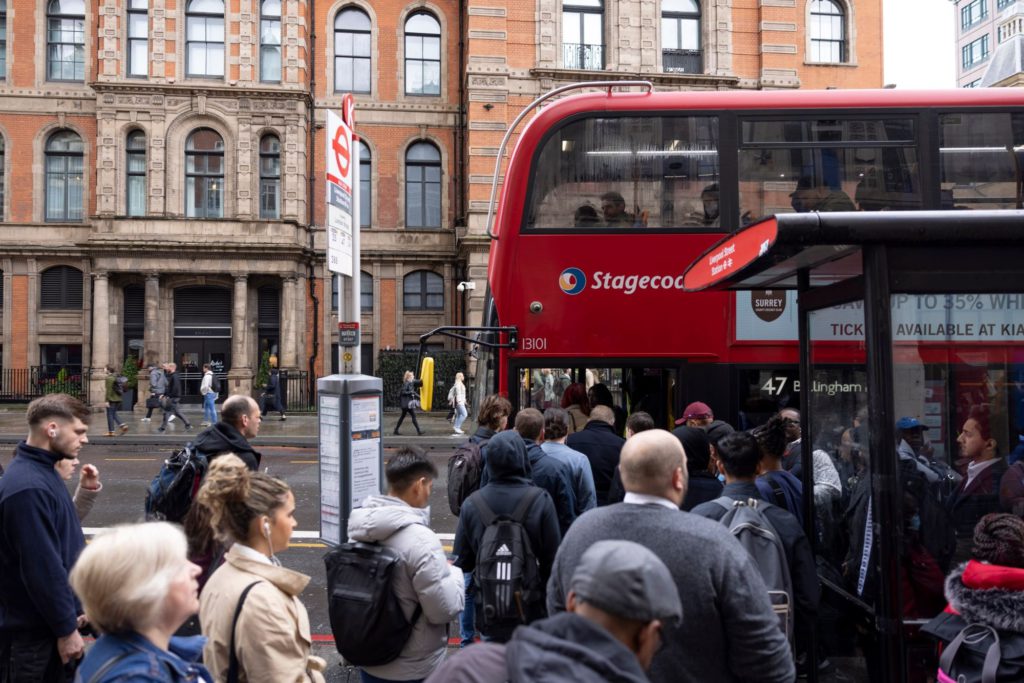
Britain’s summer had already been punctuated by scenes of travel chaos as holidaymakers were forced to sleep on airport floors and motorways became jam-packed with cars in sweltering heat. Then came the train strikes.
(Bloomberg) — Britain’s summer had already been punctuated by scenes of travel chaos as holidaymakers were forced to sleep on airport floors and motorways became jam-packed with cars in sweltering heat. Then came the train strikes.
Unions ramped up their protests with three consecutive days of train strikes in August. It followed walkouts by rail staff earlier in the month, and also at the end of both June and July.
The UK is suffering from double-digit inflation, and unions argue that their members should not have to stomach real-terms pay cuts. They are also wary of plans to reform services and working patterns to adapt to changes in travel habits following the Covid-19 pandemic.
Relations between bosses and unions have soured, with Conservative ministers also weighing in. Transport Secretary Grant Shapps accused unions in June of pursuing “some sort of class war,” and at the end of July said they were exploiting “archaic rules from 1919” to discourage staff from working on Sundays. Labor groups have repeatedly accused the government and train companies of lying about stalled negotiations and claims of informal strikes.
The threat of walkouts also lingers over other parts of the UK transport sector, from airlines to container ship ports.
At this point in time, train strikes are planned as follows:
Thursday Sept. 15
- Aslef has announced a strike by train drivers at 12 companies across the UK, including the London Overground. They will be joined by 40,000 members of the National Union of Rail, Maritime and Transport.
Saturday Sept. 17
- The RMT’s members will also strike two days later, across 14 train companies.
Monday Sept. 26
- National rail strike by the Transport Salaried Staffs’ Association, starting at midday and lasting 24 hours (affecting Network Rail and nine train companies.)
Meanwhile, British Airways pilots are also threatening to strike, with negotiations ongoing. The carrier agreed a bumper 13% deal with check-in staff.
Ryanair Holdings Plc’s Spanish cabin crew have begun four-day strikes planned for each week for the next five months.
British supply chains were dealt a blow when dockers at the country’s largest container ship port Felixstowe went on strike between Aug. 21 and 29 over wages. That dispute is still unresolved. Workers at Liverpool’s port have also voted to strike though no dates have been set.
Furthermore, Royal Mail staff have voted to strike on Sept. 8 and 9, and could announce more dates subsequently.
Nurses will vote, from Sept. 15 to Oct. 13, on whether to strike for the first time ever in England and Wales.
Britain’s criminal trial lawyers have escalated strike action in their dispute with the government over fees. The barristers — as they’re known in the UK — have walked out of courts in England and Wales, disrupting and delaying thousands of trials.
More stories like this are available on bloomberg.com
©2022 Bloomberg L.P.