
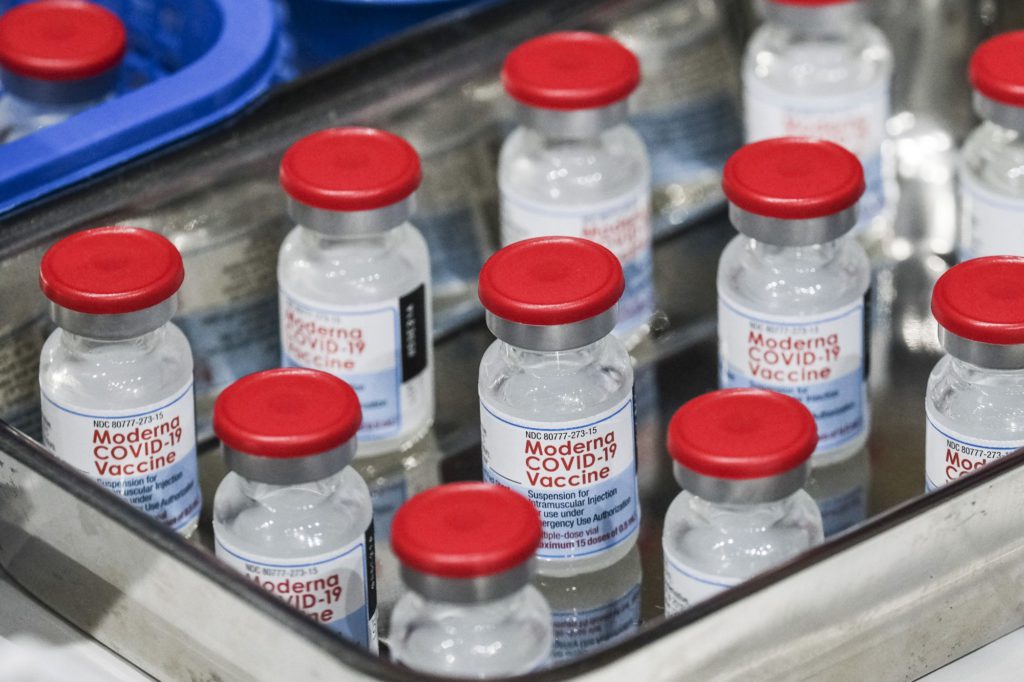
(Bloomberg) — New studies are emerging that suggest the latest version of omicron is transmitting even faster than the original, and mild cases of the first may not offer much protection against future infections.
South Africa dropped a requirement for people who test positive but have no symptoms to self isolate. Meanwhile, Austria started a dramatic public health experiment, with a divisive new law that makes Covid-19 vaccinations mandatory.
As Beijing battles a growing cluster of virus cases, the Winter Olympics may be more of a drag on the regional economy than a boost. Thailand is kicking off a quarantine-free visa program that’s set to serve as a model for tourism-reliant countries.
Key Developments:
- Virus Tracker: Cases top 378 million; deaths pass 5.6 million
- Vaccine Tracker: More than 10.1 billion shots administered
- What we know about the omicron variant now: QuickTake
- Sign up for the free Coronavirus Daily newsletter here
New Omicron Version (6:55 p.m. HK)
The BA.2 omicron subvariant of omicron is even more infectious than BA.1 and likely to become the dominant virus, based on data from Denmark and the U.K., Bloomberg Intelligence senior pharmaceutical analyst Sam Fazeli says.
Early data from the U.K. suggest that the effectiveness of vaccines against symptomatic disease doesn’t differ between the subvariants.
“Though BA.2 may not cause more severe disease, we believe its raised transmissibility could make for sustained high levels of infections and the associated effects on society,” Fazeli said. Data from the U.K. suggest a 30% increase in transmissibility.
Hong Kong Cases (6:10 p.m. HK)
Hong Kong on Tuesday reported the highest daily tally of unlinked infections in its fifth Covid outbreak as the government struggles to contain community transmission. The city had 129 newly confirmed cases – 102 were local cases and 22 have no currently known source, according to authorities.
S. Africa Isolation Rule (6 p.m. HK)
South Africa dropped a requirement for people who test positive for Covid-19 but have no symptoms to self isolate, a marked turnaround from its initial approach to the virus when it implemented one of the world’s strictest lockdowns.
Austria Vaccine Mandate (5:30 p.m. HK)
Austria has embarked on a dramatic public health experiment, with a divisive new law that makes Covid-19 vaccinations mandatory. Police will begin checking the vaccination status of people on the street and during traffic stops, and from mid-March offenders who haven’t had a shot will face fines rising to as much as 3,600 euros ($4,050).
It’s a risky political move that’s already led to tens of thousands of protesters regularly thronging Vienna’s streets.
Italy Vaccine Requirement (4:12 p.m. HK)
Vaccination will be mandatory in Italy for citizens over 50 starting Tuesday. People in that age group who haven’t received at least one shot can be fined 100 euros, and later this month will need to show a so-called “reinforced green pass”, which can only be obtained with the vaccine or after recovering from Covid, to go to work.
Pandemic Waste (3 p.m. HK)
The response to the pandemic has produced tens of thousands of tons of extra medical waste, challenging disposal systems and threatening human health and the environment, according to a World Health Organization report.
Overwhelmed waste systems, especially in lower-income nations, mean that health-care workers face the risk of needle injuries and burns, as well as exposure to pathogenic microorganisms, the WHO said. People residing near poorly managed landfills and waste disposal sites are at risk of contaminated air and poor water quality.
Shionogi Pill Seen Effective (2:30 p.m. HK)
Japanese drugmaker Shionogi & Co. shares rose the most in more than 20 months after disclosing its antiviral pill for Covid-19 was effective in a study.
Omicron Variant and Reinfection (1:15 p.m. HK)
New studies are emerging that suggest the latest version of the highly-infectious omicron variant is transmitting even faster than the original, and mild cases of the first may not offer much protection against future infections.
The findings cast doubt on hopes that the wave of omicron that’s sweeping the world may help hasten the end of the pandemic. Calls for governments to treat Covid-19 as endemic like influenza are rising globally as people grow tired of pandemic restrictions, vaccines become more accessible and deaths remain relatively low.
Thailand’s Quarantine-Free Tourism (1 p.m. HK)
Thailand expects to welcome hundreds of thousands of holidaymakers a month with the kickoff of a quarantine-free visa program that’s set to serve as a model for tourism-reliant countries balancing safe border reopenings with economic revival.
Starting Tuesday, visitors of any nationality can apply for quarantine-free entry into Thailand, provided they are fully vaccinated. The government expects between 200,000 and 300,000 travelers to take advantage of the so-called Test & Go program in February alone, with the numbers expected to swell in the following months.
Germany New Cases (11:20 a.m. HK)
Germany reported 162,613 new Covid-19 cases, compared with 78,318 the day before, according to the country’s public health authority RKI. Reported new deaths associated with the virus rose by 188, bringing the total to 117,974 while the seven-day incidence rate rose to a record 1,206.2 per 100,000 people
Beijing Local Transmissions Slow (11:15 a.m. HK)
Local transmissions in Beijing slowed as neighboring Tianjin reported seven new local infections on Monday and Hangzhou, home of e-commerce giant Alibaba, posted 13 new cases, all in areas currently under isolation.
Beijing reported two locally transmitted cases. There were 16 newly confirmed cases among Olympic athletes and team officials arriving at a “closed-loop” system via the airport, little changed compared with the previous two days.
Hong Kong’s Quarantine Hotels (10:30 a.m. HK)
Hong Kong pulled three hotels that are currently being used to quarantine newly arrived airline travelers and converted them into quarantine centers for people who have been in close contact with a Covid-19 patient. The move adds another 1,000 rooms to the 5,200 currently available.
Pfizer to Seek Approval for Under-Fives (10 a.m. HK)
Pfizer’s coronavirus vaccine might be available for kids under five by the end of February under a two-shot regimen, the Washington Post reported, citing people briefed on the situation it didn’t identify. Pfizer may submit a request for emergency use authorization as early as Tuesday.
Japan Emergency Guidelines Set (9:50 a.m. HK)
Japan’s daily new cases fell for a second day to 60,838 Monday after peaking at 84,967 Saturday, according to data compiled by national broadcaster NHK.
Separately, Tokyo plans to set new guidelines for seeking a Covid-19 state of emergency, TV Asahi reported Tuesday, without saying where it got the information. Tokyo will take into account the number of mild and seriously ill patients, in addition to daily new cases and hospital-bed occupancy rates, the broadcaster said.
Tokyo’s hospital-bed occupancy ratio was 49.2% on Monday, approaching the 50% level that Governor Yuriko Koike earlier gave as a rate at which Tokyo might consider seeking a state of emergency.
More stories like this are available on bloomberg.com
©2022 Bloomberg L.P.