(Bloomberg) — A stake that Nelson Peltz’s activist hedge fund has built in Unilever Plc is adding to pressure on the Dove soap maker’s chief executive officer, Alan Jope, after Jope’s failed bid to buy a consumer-health unit from GlaxoSmithKline Plc.
Peltz’s Trian Fund Management has bought a meaningful stake in London-based Unilever over the past few months, according to people familiar with the matter, who asked not to be identified because the plans are private. The exact size of the stake or Peltz’s intentions couldn’t be immediately learned.
The emergence of an activist investor is the latest challenge for Jope, who is already reeling from the failed GSK purchase and faces growing pressure to deliver a new strategy. Billionaire Peltz is turning his attention to Unilever after retiring from Procter & Gamble Co.’s board in August after nearly four years that brought several dramatic changes aimed at improving that consumer-goods giant’s performance.
“The fox would now appear to be inside the henhouse,” Jefferies analysts led by Martin Deboo wrote Sunday. “The force and temperature of debate around Unilever now looks set to rise by several notches.”
Trian will likely argue for splitting Unilever’s food business from its household and personal care operations, Deboo wrote, and “further increase the pressure” on Jope and the board.
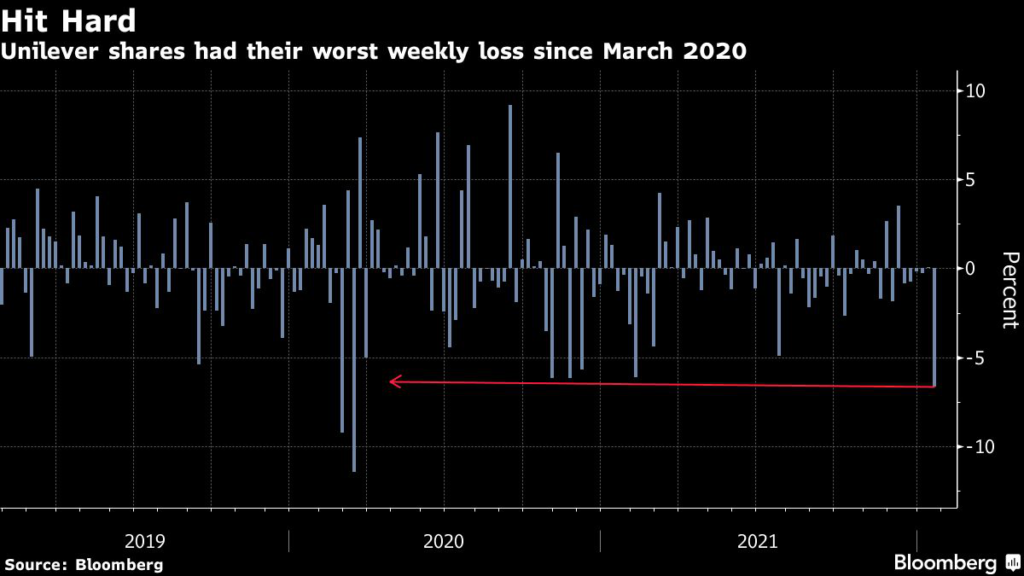
Unilever shares recorded their worst weekly loss since the peak of the pandemic selloff in March 2020 after it confirmed on Jan. 16 that it offered 50 billion pounds ($68 billion) for the GSK health-care unit, which includes brands such as Advil and Sensodyne. GSK rejected the bid as too low, and Unilever later said it had no plans to raise the offer. GSK has its own activist investor in the mix, with Elliott Investment Management pushing for changes.
Unilever shares could benefit from Peltz’s stake-building on Monday. Trian, which was co-founded by Peltz, Ed Garden and Peter May, has a history of pushing for changes at consumer companies, including PepsiCo Inc., Danone SA, Kraft Foods Inc. and others. Unilever rose less than 1% on Jan. 21, giving it a market valuation of about 94 billion pounds. Its shares had declined about 6.9% in a year.
CEO Jope’s public defeat came after analysts implored him not to pursue the Glaxo unit. Fund manager Terry Smith called the GSK bid a “near-death experience.” Only days earlier, he had urged Unilever to focus more on fixing its own business rather than seeking to promote the sustainability ethos of brands such as Hellmann’s mayonnaise.
The Financial Times earlier reported the Trian stake. Representatives for the hedge fund and Unilever declined to comment.
It remains to be seen whether Jope’s setback with GSK will prompt the kind of radical changes implemented at Unilever after Kraft Heinz Co.’s failed bid to acquire Unilever in 2017 for $143 billion. That debacle led Unilever to consolidate its headquarters in the U.K., ditch a cumbersome Anglo-Dutch structure, and adopt a more aggressive acquisition strategy.
More stories like this are available on bloomberg.com
©2022 Bloomberg L.P.