
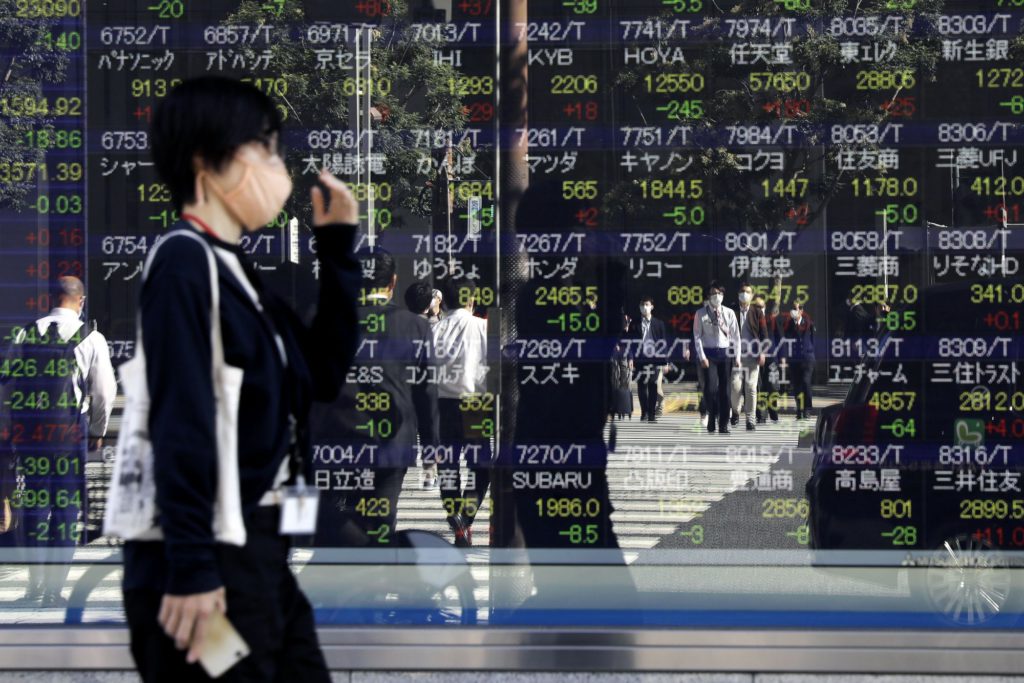
(Bloomberg) — Asian stocks looked set for a mixed start Friday following a decline in U.S. shares led by the technology sector as tightening monetary policy to fight inflation buffets investor sentiment.
Australian equities edged up, while futures pointed lower for Japan and were little changed for Hong Kong. The tech-heavy Nasdaq 100 sank the most since September, skidding on reduced appetite for more richly valued investments amid the Federal Reserve’s pivot toward scaling back outsized stimulus. U.S. equity contracts wavered in early Asian trading.
Treasury yields drifted lower, potentially reflecting worries that the fast-spreading omicron virus variant will spark curbs that hamper the economy.
A dollar gauge retreated and is now flirting with a third-straight weekly drop. Oil held most of a recent climb, bolstered by the biggest U.S. crude stockpile shrinkage since September and the dollar move.
Central banks globally are tightening monetary settings in a bid to restrain price pressures, while also keeping a wary eye on the impact of omicron. That backdrop has investors questioning whether global stocks are due for a rougher patch after almost doubling from pandemic lows.
“The cycle you are seeing here is really about a change in tone, a change in regime, the possibility of tighter policy next year, not just at the Fed, but globally,” Alicia Levine, head of equities and capital markets advisory at BNY Mellon Wealth Management, said on Bloomberg Television.
Rate Hike
The Bank of England unexpectedly raised interest rates on Thursday, sending the pound higher. The European Central Bank temporarily boosted regular monthly bond buying for half a year to smooth the exit from crisis stimulus.
The Federal Reserve this week doubled the pace at which it tapers bond purchases and projected three quarter-point rate increases in 2022, another three in 2023 and two more in 2024.
Elsewhere, Senate Democratic leaders failed to break a deadlock over President Joe Biden’s $2 trillion economic agenda, punting action on the tax and spending bill to January in a political blow to the White House.
U.S.-China Tension
But the Senate did pass legislation that would ban goods from China’s Xinjiang region unless companies prove they weren’t made with forced labor. The Biden administration also added 34 Chinese targets to its banned-entity list, keeping tension with Beijing on the boil.
In the latest U.S. data, applications for state unemployment benefits rose last week but remained near the lowest levels of the pandemic as the labor market recovery continues. U.S. housing starts strengthened in November to the fastest pace in eight months, while output at factories advanced solidly.
Here are some key events this week:
- Bank of Japan monetary policy decision, Friday.
- S&P Dow Jones Indices quarterly rebalance effective after markets close, Friday.
For more market analysis, read our MLIV blog.
Some of the main moves in markets:
Stocks
- S&P 500 futures were flat as of 8:19 a.m. in Tokyo. The S&P 500 fell 0.9%
- Nasdaq 100 futures lost 0.1%. The Nasdaq 100 fell 2.6%
- Nikkei 225 futures fell 0.8%
- Australia’s S&P/ASX 200 index rose 0.4%
- Hang Seng futures were little changed
Currencies
- The Bloomberg Dollar Spot Index fell 0.5%
- The euro was at $1.1332
- The Japanese yen was at 113.70 per dollar
- The offshore yuan was at 6.3800 per dollar
Bonds
- The yield on 10-year Treasuries declined five basis points to 1.41%
Commodities
- West Texas Intermediate crude slipped 0.6% to $71.94 a barrel
- Gold traded at $1,798.70 an ounce
More stories like this are available on bloomberg.com
©2021 Bloomberg L.P.