
(Bloomberg) — Sign up for the New Economy Daily newsletter, follow us @economics and subscribe to our podcast.
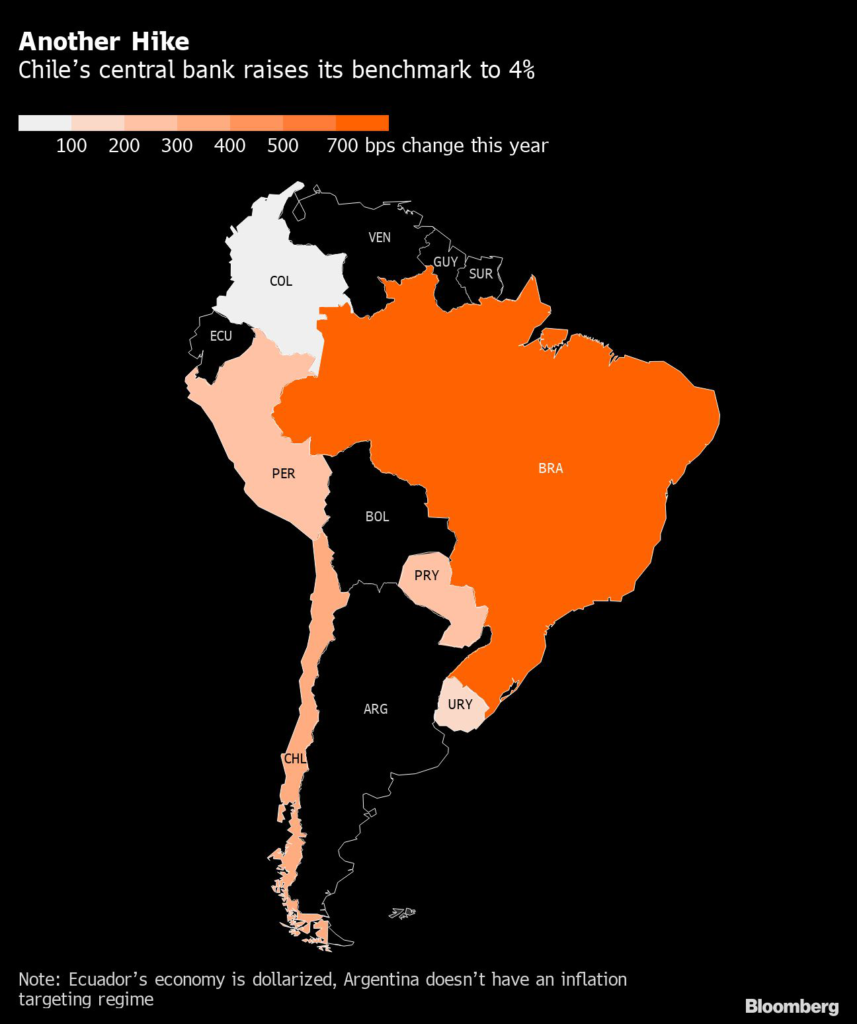
Chile’s central bank raised its interest rate by 125 basis points for the second straight meeting and signaled a more restrictive monetary policy will be put in place at least temporarily to tame soaring inflation.
The bank raised the overnight rate to 4% on Tuesday, as forecast by most analysts in a Bloomberg survey. In a statement, policy makers wrote economic activity has been dynamic, and that inflation expectations have risen further above the 3% target, though estimates show moderation in 2023.
Chile’s monetary policy rate “will be further increased in the short term, to exceed its nominal neutral level,” they wrote, adding it will remain there during much of the monetary policy horizon. “This will help the economy to resolve its cumulative imbalances, which have contributed to the fast increase in inflation.”
Policy makers led by Mario Marcel are trying to tackle rampant inflation as the economy is forecast to expand more than 11% this year, its fastest pace on record. Workers flush with cash from early pension withdrawals and emergency aid during the pandemic have propelled demand for goods from food to cars. Meanwhile, political uncertainty ahead of the presidential runoff is weakening the peso, pushing up the cost of imports.
What Bloomberg Economics Says
“The message is clear. They will continue to raise rates to a level with restrictive monetary policy. Considering that inflation expectations were more stable in December and also that a rapid deceleration in activity is expected in 2022, the additional rate increases will likely be smaller. Borrowing costs won’t go significantly above neutral.”
–Felipe Hernandez, Latin America economist
Click here for full report
The rate hike comes ahead of Sunday’s highly-contested presidential runoff. The election pits leftist Gabriel Boric, who pledges higher taxes and improved public services, against conservative rival Jose Antonio Kast, who wants lower levies and a smaller role for the state.
Read more: Chile’s Polarized Presidential Election Promises a Shake-Up
Hiking Pace
Faster inflation and higher interest rates are a worldwide phenomenon. Last week, Brazil and Peru raised borrowing costs, while Mexico and Colombia are expected to lift rates later this week.
Read more: Why Inflation Is Scaring Latin America If Not the Fed: QuickTake
Chile’s annual inflation soared to 6.7% in November, marking the highest level since 2008. Both economists and traders surveyed by the monetary authority see price-growth running above target for the next two years.
In the statement, policy makers wrote that Chile’s labor market recovery has been slow. Expectations for both households and businesses have recently taken a turn for the worse due to greater consumer price concerns, they wrote.
Globally, economic growth prospects have moderated, especially in emerging markets, board members wrote. Supply shocks have continued to affect certain sectors, and risks stemming from the pandemic remain.
Chile’s economic growth will slow to between 1.5% and 2.5% next year, according to the latest central bank estimates. Board members will publish updated forecasts on Wednesday in their latest monetary policy report.
Put together, the bank will continue raising rates in the short-term, though likely at a slower pace, said Sebastian Diaz, an economist at Pacifico Research. By saying that policy will be restrictive over much of their horizon, board members leave the door open to eventually bringing rates back down to neutral, he said.
“Inflation expectations are important,” Diaz said. “They are what’s worrying the central bank.”
(Re-casts the story, adds details from the statement starting in second paragraph)
More stories like this are available on bloomberg.com
©2021 Bloomberg L.P.