
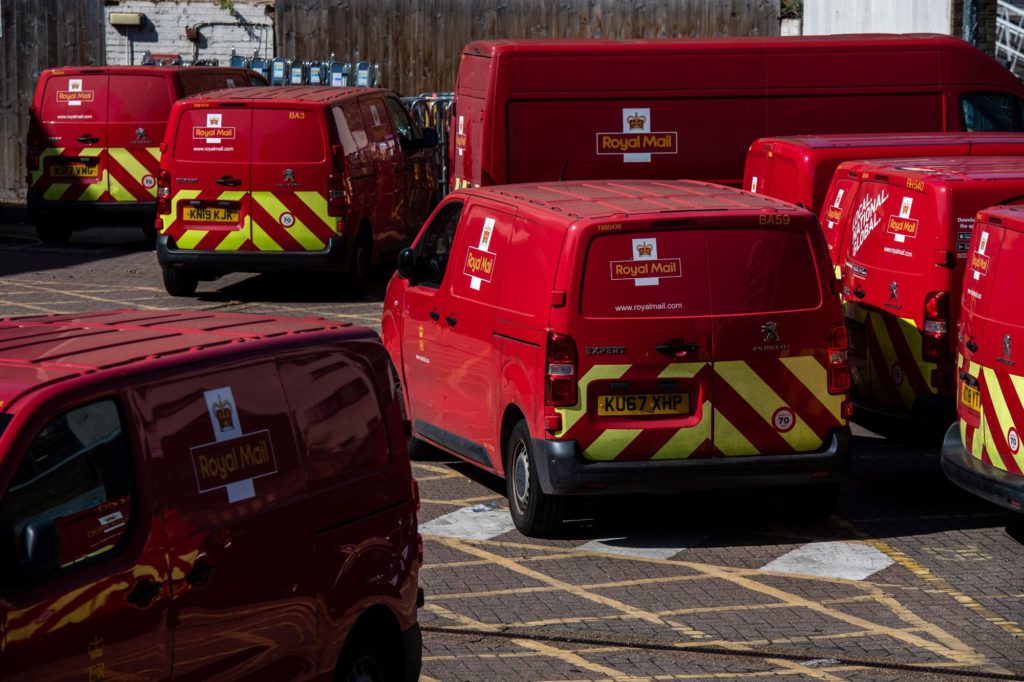
Royal Mail Plc, the biggest flash-point of Britain’s summer of industrial strife with 115,000 striking employees, could also prove to be the most intractable as a new round of walkouts begins with no deal in sight.
(Bloomberg) — Royal Mail Plc, the biggest flash-point of Britain’s summer of industrial strife with 115,000 striking employees, could also prove to be the most intractable as a new round of walkouts begins with no deal in sight.
While sorting staff and delivery workers are pressing for a raise mirroring cost-of-living increases, potentially double that on offer, the company says it won’t sweeten its proposals without an agreement to fundamentally change a wide range of working practices.
“There is no single sticking point, which is why the dispute is so difficult to resolve,” Liberum analyst Gerald Khoo said ahead of the latest strike Thursday.
Any deal must include a pay hike taking into account both the cost-of-living crisis and the contribution of postal workers during the Covid pandemic, the Communication Workers Union says. The group also wants to avoid any casualization of the workforce — a term used to describe a shift from full-time, permanent employment to short-term, less secure contracts.
“Our members have given repeated mass mandates to continue this strike,” CWU spokesman Marcus Barnett told Bloomberg. “Workers on the shop floor have shown every indication that they are up for digging their heels in.” After talks this week he said there has been “little to no budge in negotiations”
For its part, Royal Mail is pushing a long-mooted modernization agenda it says has taken on new importance after the health crisis accelerated a trend toward online shopping. With parcel deliveries even more vital to competitiveness and letter volumes continuing their inexorable slide, the company wants to introduce new delivery schedules so far resisted by the union.
Later Rounds
A Royal Mail spokesman confirmed that the company is looking to start rounds two hours later in order to maximize its ability to fulfill next-day package deliveries. The move would also reduce reliance on aircraft and allow more general mail to be put back on trains, reducing fuel costs.
The changes would shift first deliveries to 9 a.m. with the last post at 7 p.m. There are no plans to scrap services, the spokesman said, following reports that some areas could lose their morning post. The CWU says the later rounds and mandatory weekend working are “infuriating people on the ground.”
The two sides also disagree on pay, with the 500-year-old company offering a 2% raise, plus 2% available as a productivity bonus and 1.5% conditional on workers agreeing changes to terms and conditions. The union says its members want a pay rise that fully addresses the current rate of inflation.
‘Personal Costs’
Higher wages can normally be warranted in return for savings and improved productivity, but in the case of Royal Mail the CWU wants to separate the issues, according to Liberum’s Khoo. And some measures sought “are likely to be resisted because they have potentially large personal costs for staff.”
With talks at a standstill, the company has threatened to split off a profitable international logistics arm if attempts at modernization are blocked, saying the UK unit is losing £1 million a day. Chairman Keith Williams said in July that the move would protect Royal Mail’s “value and prospects,” while the CWU described the plan as “pathetic.”
Royal Mail was first listed on the London Stock Exchange in 2013, with its shares enduring a bumpy ride since. They fell to an all-time low as the coronavirus hit in March 2020 before making up ground as the pandemic proved a boon to delivery services.
More to Come
The recent industrial dispute as well as a fall in demand for services such as at-home coronavirus kits has seen the stock slide again, down 48% this year.
From Thursday, staff will commence a two-day strike, with another slated for Sept. 30. Previous walkouts on Aug. 26 and 31 led deliveries to arrive several days late, with National Health Service and other public mailings prioritized. Royal Mail has said it will make a loss for the year if the strikes continue.
“The problems in Royal Mail have to be resolved,” said Khoo. “All disputes come to an end. But until a resolution is found, and unless that settlement delivers meaningful change, the UK business will continue to destroy shareholder value.”
More stories like this are available on bloomberg.com
©2022 Bloomberg L.P.