
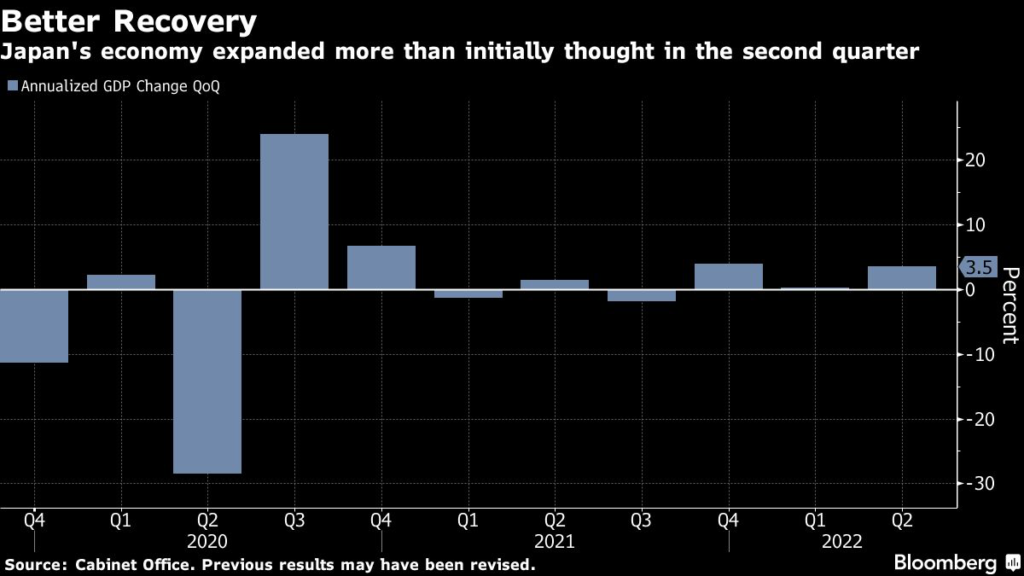
Japan’s economy expanded more than initially estimated in the three months through June, recovering the ground it lost during the pandemic, before downside risks began to materialize in the global economy.
(Bloomberg) — Japan’s economy expanded more than initially estimated in the three months through June, recovering the ground it lost during the pandemic, before downside risks began to materialize in the global economy.
Gross domestic product grew an annualized 3.5% in the second quarter from the previous period, revised figures from the Cabinet Office showed Thursday. Economists had expected a 2.9% expansion, compared with an initial reading of 2.2%.
Thursday’s numbers confirm that Japan’s economy regained its pre-pandemic size and is on firmer footing than was seen in the initial reading. The recovery pace picked up as Japan emerged from the winter wave of the virus, prompting gains in consumer outlays, while business spending rose 2% after the finance ministry reported a stronger increase last week.
Longer term, companies are encouraged to invest into digital and green technology as the government pushes toward various goals in both areas.
Analysts expect the recovery to continue in the current quarter while its pace may slow as a record virus wave in the summer and the rising costs of living threaten to cool consumption.
The government has kept the economy free of virus-related restrictions in a strategic change. Although new cases surged to more than 200,000 a day over the summer, the number of serious cases and deaths remain relatively limited compared with the number of infections.
Since then the latest virus wave appears to have peaked, but the blow to households from inflation is steadily increasing. More expensive food prices and higher power bills are hitting consumers and businesses who largely rely on other nations for their food and energy needs.
What Bloomberg Economics Says…
“We expect GDP growth to slow in 3Q, with a record wave of Covid-19 cases and faster inflation damping consumer spending. Net trade is also likely to be a drag. A weaker yen that’s driving up the cost of imports is likely to widen the trade deficit to a new record. Slower global growth will probably weigh on exports.”
–Yuki Masujima
For the full report, click here.
The yen’s fresh slide to its 24-year low versus the dollar is also making imports more expensive. To help them, Prime Minister Fumio Kishida is set to announce another round of price relief measures on Friday. As part of the package, local media reported that the government is considering handing out 50,000 yen ($349) to low-income households.
Inflation remains a global phenomenon, fueled by the war in Ukraine, post-pandemic demand and supply line glitches. As Japan’s major trading partners like the US and Europe try to cool their economic growth to contain rampant price gains, Japan’s exporters may also take a hit. Key indicators in July have shown a mixed picture with production picking up and consumption cooling.
(Updates to add more details from the report)
More stories like this are available on bloomberg.com
©2022 Bloomberg L.P.