
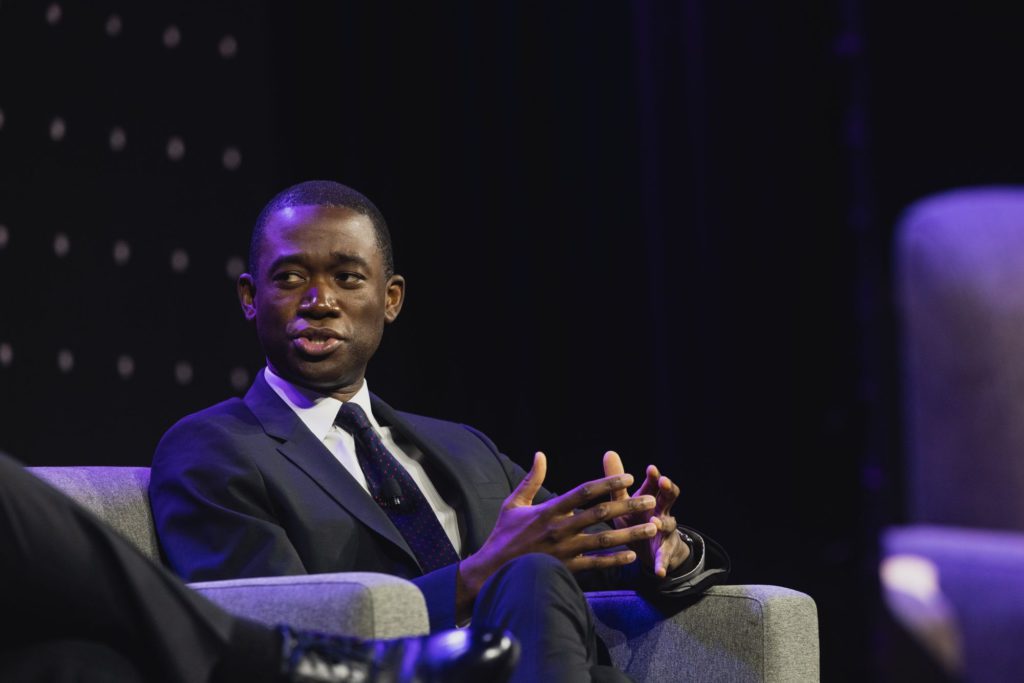
Deputy Treasury Secretary Wally Adeyemo said Russia’s economy faces years of hardship as a result of the measures taken by the US and its allies over President Vladimir Putin’s invasion of Ukraine.
(Bloomberg) — Deputy Treasury Secretary Wally Adeyemo said Russia’s economy faces years of hardship as a result of the measures taken by the US and its allies over President Vladimir Putin’s invasion of Ukraine.
While Russia has enjoyed record current-account surpluses this year thanks to earnings from exports of oil and gas, an internal report prepared for that country’s government showed it faces a deep and prolonged recession, Bloomberg reported. Adeyemo painted a similar picture from the US Treasury’s vantage point.
“Russia’s economy is in a great deal of pain because of the sanctions we’ve implemented with 30 other countries — and the pain is going to continue for years to come,” Adeyemo said on Bloomberg Television’s “Balance of Power with David Westin.”
Adeyemo touted the US-led efforts to set a cap on Russian oil-export prices, which will further constrain Moscow’s options going forward. Even if some nations opt not to join that initiative, “they’re going to be in a better position to negotiate” lower prices as a result, he said.
The Group of Seven top industrialized countries last week threw its backing behind the plan to place a price cap on Russian oil exports. Treasury Secretary Janet Yellen and her counterparts in a Sept. 2 statement said their governments would implement the cap in line with European Union sanctions set to kick in on Dec. 5.
India Considering
The price ceiling actually represents a weakening of European Union, UK and Swiss rules set to prohibit services critical to ocean-going shipments of crude, including insurance and financing on tankers carrying Russian oil anywhere in the world. Under the plan, purchases of Russian oil at or below the cap would receive an exemption from the services bans.
By providing exemptions, the US believes the price cap would prevent the new sanctions from shutting Russian oil out of the global market and causing a spike in prices. It would also serve to limit Moscow’s revenues — undercutting its capacity to fund its ongoing war in Ukraine.
Adeyemo said that India, which has historical ties with Russia and hasn’t joined in the sanctions measures, is open to the idea of joining the price-cap effort.
“Over the weekend I was encouraged to see a message from the petroleum minister of India saying that they’re considering joining,” he said.
More stories like this are available on bloomberg.com
©2022 Bloomberg L.P.