
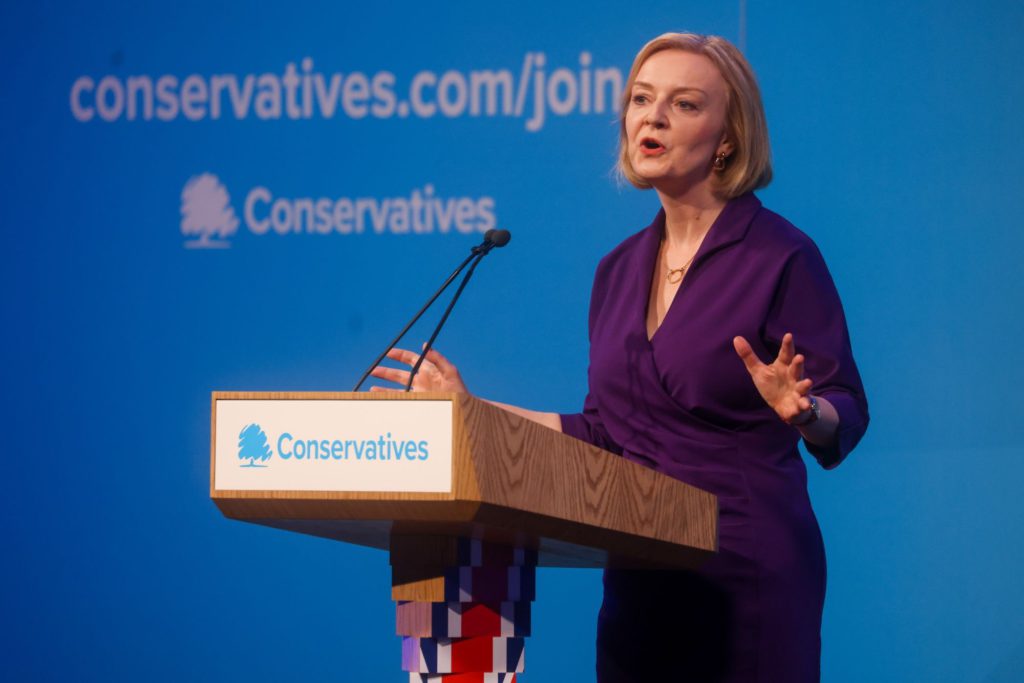
Britain’s inflation rate may already have passed its peak if Prime Minister Liz Truss moves ahead with her plans to freeze energy bills for households and business.
(Bloomberg) — Britain’s inflation rate may already have passed its peak if Prime Minister Liz Truss moves ahead with her plans to freeze energy bills for households and business.
Economists at Barclays, Berenberg and Bloomberg Economics said Truss’s package to rein in soring electricity and natural gas prices would have a sweeping impact on the UK economy and may manage to arrest inflation at July’s reading of 10.1%.
The forecasts underscore the importance of surging the cost-of-living squeeze to the outlook for the UK. By halting increases in utility bills, the government could stop the biggest upward pressure on consumer prices, giving the both consumers and investors breathing room to adjust to other pressures pushing up the cost of goods and services.
“Inflation may already have peaked,” Fabrice Montagne, UK economist at Barclays, wrote in a note to clients Tuesday. “There is a case to expect higher inflation in other parts of the consumer basket as lower energy prices allow households to shift spending.”
Lower inflation may ease pressure on the Bank of England to raise rates in the short term. But the economists said £200 billion of support for households and businesses, as suggested in government documents seen by Bloomberg, could prove inflationary further in the future. Truss is expected to unveil her plans later this week after taking office today.
Ana Luis Andrade of Bloomberg Economics said the bill freeze “would reduce the chances of a 75-basis-point hike in September,” but “by raising the risk of the economy overheating, the flip-side could be higher rates for longer.”
What Bloomberg Economics Says …
“Incoming UK Prime Minister Liz Truss is reported to be considering an energy-cap freeze for households, as well as fresh support for businesses. It’s early days, but if her plans materialize, the emergency relief would be similar in scale to government support during the pandemic. That would drastically change the economy’s outlook. In this scenario, inflation won’t rise much further from current levels and the Bank of England’s 2% target would be in sight within a year. A recession is also likely to be avoided.”
–Ana Luis Andrade, Bloomberg Economics. Click for the
Investors currently are betting that the BOE will raise rates to 4.5% or more by the middle of next year from 1.75% currently. Governor Andrew Bailey and his colleagues testify to Parliament on Wednesday about their outlook.
Barclays said inflation could fall back to 5% in 2023, which is 6.25 percentage points below its current forecasts.
“Capping energy prices would provide welcome help to the BOE in regaining control of inflation dynamics,” Montagne wrote. “Prolonged hikes into next year are now less likely, in our view.”
He added that it “does call for relatively tighter monetary policy in the medium to long run as energy costs will then be higher.”
Berenberg Bank’s Chief Economist Holger Schmieding said inflation is now likely to be 10% in the fourth quarter and may drop to 9.5% in the first quarter.
That’s well below the BOE’s forecast for prices to rise 13.1% later this year. It’s also sharply below a forecast made last week by Goldman Sachs, which warned 22% inflation could be possible if gas prices remain elevated.
Energy bills are due to rise 80% in October to an average of £3,548 after the regulator Ofgem allowed a cap on costs to increase. Its next review would allow the price to rise further above the current limit of £1,971 a year, since the price of gas in wholesale markets is spiraling ever higher.
Freezing the price will mechanically bring down inflation in the short term but could push up energy bills later. The fiscal package could stimulate an economy that’s already coping with a tight labor market and surging wages. The effect could be that inflation would “persist for longer,” Andrade said.
A longer spell of inflation above the BOE’s 2% target could in the eyes of Bloomberg Economics lift the key rate above 3% “and to remain elevated for longer,” Andrade said.
Other European countries, such as France, Spain and Italy, have used similar price caps to prevent headline inflation levels soaring upwards.
Read more:
- Liz Truss’s Relief for Energy Bills Is Uncapped Liability for UK
- Philip Hammond Says UK Energy Bailout May Boost Interest Rates
- Truss Plans £40 Billion Energy-Aid Package for UK Businesses
- Truss Drafts £130 Billion Plan to Freeze UK Energy Bills
More stories like this are available on bloomberg.com
©2022 Bloomberg L.P.