
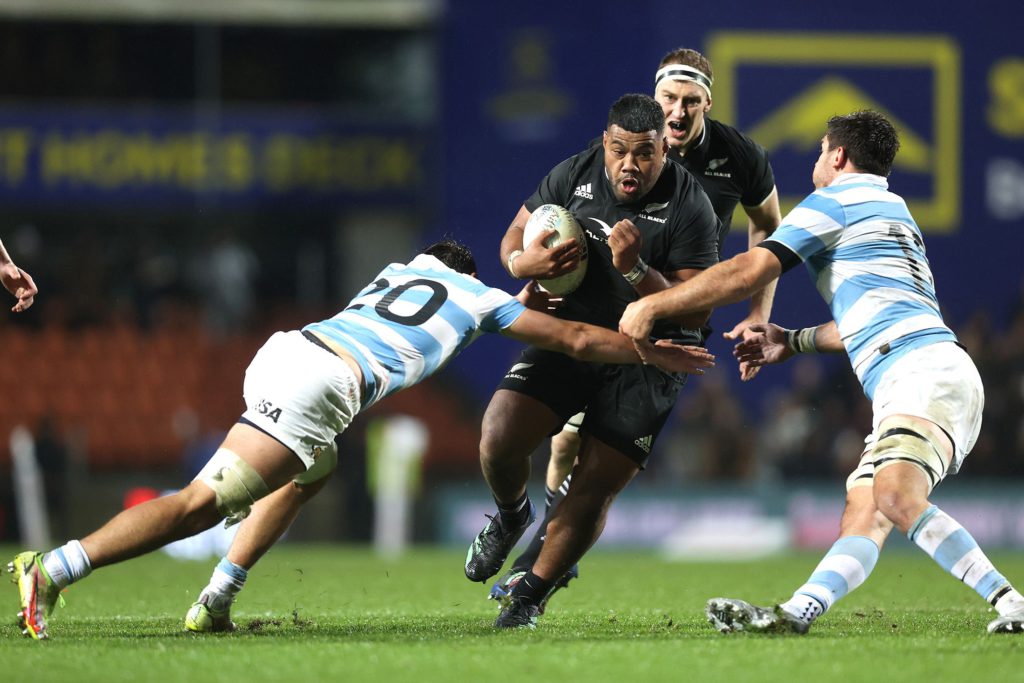
New Zealand rugby administrators may be rethinking plans to seek additional capital from investors this year amid a run of poor form by national men’s team the All Blacks.
(Bloomberg) — New Zealand rugby administrators may be rethinking plans to seek additional capital from investors this year amid a run of poor form by national men’s team the All Blacks.
New Zealand Rugby in June agreed to sell a minority stake in its commercial operations to US private equity firm Silver Lake for NZ$200 million ($122 million), valuing its business at NZ$3.5 billion. It also said it would raise as much as NZ$100 million through an additional offer to New Zealand investors “later in 2022,” underwritten by Silver Lake.
While NZR said it still intends to seek those extra funds from New Zealand institutional investors, it is now refusing to confirm it will do so this year. The timing is “a work in progress,” Richard Thomas, chief executive of NZR Commercial, said in response to emailed questions.
Pressed further on whether the capital raise would occur this year as originally planned, an NZR spokesman said: “All we can say at this point is that the timeline will be discussed by NZRC and NZR Boards over the coming months.”
Silver Lake declined to comment.
Losing Streak
The All Blacks, who have long held the crown as the best rugby team on the planet, have lost six of their last nine games and slipped to fourth in the world rankings. Continued poor performance has the potential to erode brand value and possibly dent demand for shares if the capital raise goes ahead.
“A brand as strong as the All Blacks takes a long time to build up, and that gives it a resilience to short-term shocks,” said Hugo Hensley, head of sport services at London-based Brand Finance. “However, if poor performance continues in the long-run, this could cause a decline in both brand value and brand strength.”
Sam Stubbs, managing director at pension fund Simplicity, doesn’t think the All Blacks’ recent performance will put investors off, but said it may affect the price of a share sale “at the margin.”
“It’s a question mark, whereas there were no question marks before,” he said.
More broadly, Stubbs said the involvement of outside investors will bring a new level of scrutiny to the All Blacks, with less tolerance for performance slumps and possibly higher coach and player turnover.
“Financial shareholders aren’t buying the stock because they’re emotionally attached to the brand but because they want to make money,” he said. “They are far more clinical about the way they would look at the team; they look at the performance of the asset. So I think you could start to see more clinical scrutiny of under-performance in the future.”
The All Blacks have dominated rugby for well over a century, winning 77% of international test matches since their first in 1903.
But their recent form is fueling speculation that this dominance is coming to an end, and has seen furious debate in New Zealand over whether coach Ian Foster and captain Sam Cane should keep their jobs.
The team lost three straight games at home this year — something that hasn’t ever happened in their 119-year history. It endured two losses to Ireland and was then defeated on home turf by Argentina — ranked sixth in the world — for the first time.
Under intense pressure, the team bounced back with a convincing win over Argentina last weekend. However, the inconsistency has raised concerns that the All Blacks won’t be contenders at next year’s World Cup, a marquee event that they have won three times previously.
Hensley said the All Blacks’ recent string of losses is not yet likely to cause lasting damage, as broadcasting and sponsorship deals have a much longer time horizon than the current rough patch.
But he said sporting brand strength will always be closely linked to on-field performance, and the All Blacks’ brand positioning revolves around being perceived as an elite and successful team.
“It is true that consistently poor performance may dampen these attributes in the future,” Hensley said. “Consequently, it is possible that over time, as the All Blacks’ brand strength decreases, revenue from ticket sales, broadcasting, merchandising and sponsorships may fall.”
New Zealand Rugby Unions Give Green Light to Silver Lake Deal
By selling a stake in its commercial operations, NZR aims to invest in rugby at all levels while using Silver Lake’s expertise to leverage the All Black brand and grow revenues.
Under the original plan, Silver Lake would own between 5.71% and 8.58% of NZR CommercialCo. after the sale of NZ$62.5 million to NZ$100 million of additional shares to New Zealand investors.
Thomas said the All Blacks’ legacy has been built over 100 years, and the team’s 53-3 thrashing of Argentina on Saturday “epitomized the qualities of character, resilience, skill and performance under pressure that makes the team and its legacy so special.”
“Silver Lake understands the All Blacks legacy,” he said. “It is a partnership through which we are all taking a long-term perspective and continue to be excited about what we can achieve together.”
More stories like this are available on bloomberg.com
©2022 Bloomberg L.P.