
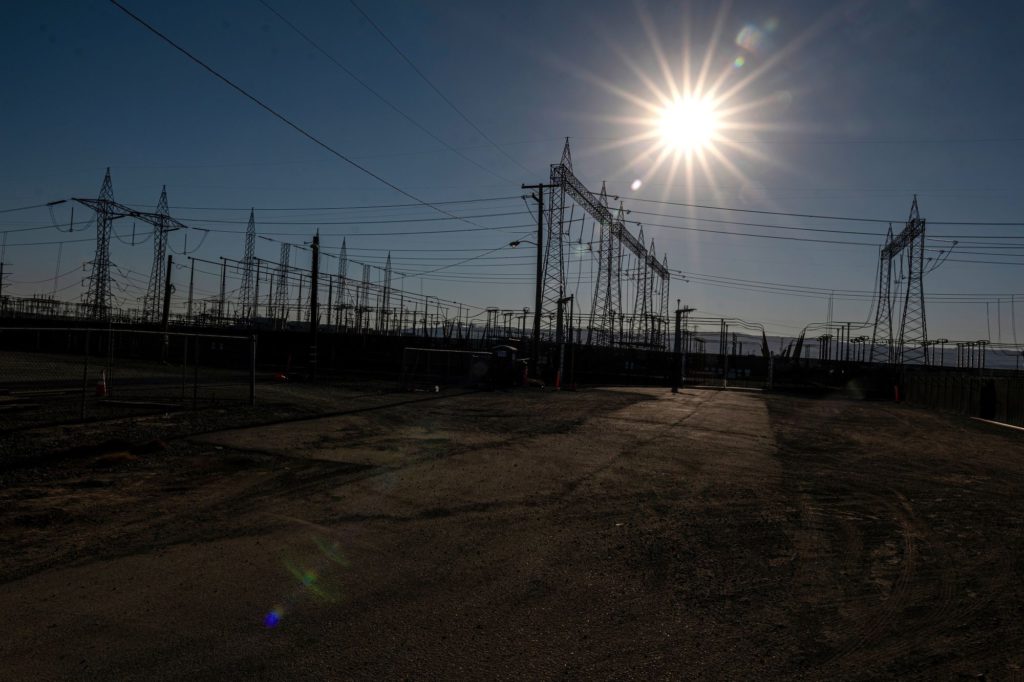
California declared a power grid emergency Monday as a blistering and sustained heat wave threatens to push the state’s electricity system beyond its limit.
(Bloomberg) — California declared a power grid emergency Monday as a blistering and sustained heat wave threatens to push the state’s electricity system beyond its limit.
With millions of homes and businesses cranking air conditioners to cope with temperatures above 110 degrees Fahrenheit (43.3 Celsius), electricity use in the largest US state is forecast to hit the highest level since 2017, raising the specter of blackouts.
“Rotating outages are a possibility today,” said Elliot Mainzer, chief executive officer of the California Independent System Operator, known as Caiso, which runs the state’s grid. To avoid blackouts, consumers will need to ramp up conservation by two or three times, Mainzer said Monday during a media briefing.
“We are now moving into the extreme part of this heat wave, and really stepping up those actions will be essential for maintaining reliability,” Mainzer said. If voluntary conservation measures fall short Monday, Caiso will declare a level-2 grid emergency, which would free up more generation supplies, he said. Rotating blackouts would be used as a last resort.
The prospect of blackouts underscores how grids have become vulnerable in the face of extreme weather as they transition from fossil fuels to renewable energy. California has aggressively closed natural-gas power plants in recent years, leaving the state increasingly dependent on solar farms that go dark late in the day just as electricity demand peaks. At the same time, the state is enduring its worst drought in 1,200 years, sapping hydropower production.
Much of California is under an excessive heat warning for the next four days. Sacramento could reach 113 on Monday and 115 on Tuesday shattering records for those days, Bob Oravec, a senior branch forecaster with the US Weather Prediction Center, said. Downtown Los Angeles reached 103 on Sunday, which was the first time the temperature broke 100 this year.
California officials said the state could break the all-time record for power demand on Tuesday, as students come back to classrooms and businesses reopen after the long holiday weekend. In addition, hot and dry conditions across the state will leave it vulnerable to wildfires.
The heat wave, which began the last week of August, is remarkable for both its ferocity and duration, officials said.
Each day the heat drags on, the risk of power failures rise. Searing temperatures seep into concrete over time, making it increasingly difficult to cool buildings. And the longer power plants run full tilt, the more likely they are to break down.
Ahead of the heat wave, California Governor Gavin Newsom has issued an emergency proclamation to free up extra power supplies.
The fight to keep power flowing in California is complicated by wildfires near Los Angeles and San Diego that are threatening transmission lines and power plants, though there had been no major interruptions as of Sunday afternoon, Mainzer said.
A break from the heat will come across Southern California later this week, thanks to Tropical Storm Kay in the Pacific Ocean, Oravec said.
Kay, set to become a hurricane later this week, is forecast to edge up the coastline of Mexico’s Baja California peninsula. As it moves north, the storm will pump moisture and clouds into Southern California and Arizona, taking an edge off the heat.
(Adds comments from California ISO CEO starting in third paragraph)
More stories like this are available on bloomberg.com
©2022 Bloomberg L.P.