
Oil fell as demand concerns escalated, the dollar marched higher, and investors turned away from risk assets including commodities.
(Bloomberg) — Oil fell as demand concerns escalated, the dollar marched higher, and investors turned away from risk assets including commodities.
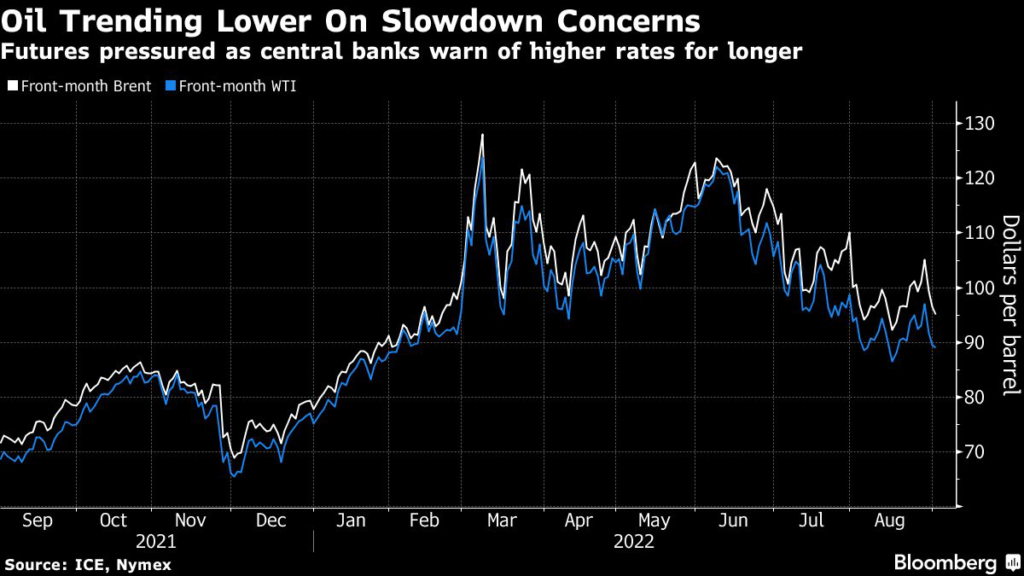
West Texas Intermediate sank below $89 a barrel after capping a third monthly drop in August, the longest losing streak since April 2020, as central banks including the Federal Reserve tightened policy to combat elevated inflation. Separately, traders were tracking ship movements through the Suez Canal after a tanker ran aground, interrupting traffic, before it was refloated.
In China, the world’s top oil importer, the Sichuan metropolis of Chengdu was to be locked down from Thursday night after a rise in local Covid-19 cases. It’s the biggest city to shut be since Shanghai’s bruising two-month crisis earlier this year, and follows weak macro-economic readings for August.
Oil slumped by more than 20% in the three months through August as the Fed and other central banks hoisted rates, stoking concern of a slowdown or even a recession. The slump overturned all of crude’s gains since Russia’s invasion of Ukraine at the end of February, and prompted Saudi Arabia to signal the Organization of Petroleum Exporting Countries and its allies could cut supply.
“Markets are digesting conflicting triggers at the moment,” said Vishnu Varathan, head of economics and strategy at Mizuho Bank Ltd., citing factors including the concerns over demand, as well as talks to revive an Iranian nuclear deal that could in time clear the way for increased oil flows. “The market will be wary ahead of the OPEC+ meeting on Monday.”
As crude dropped on Thursday, other industrial commodities including copper also retreated. At the same time, a global equity index hit a six-week low.
Ministers from the 23-nation OPEC+ coalition are scheduled to meet on Sept. 5 to decide on production policy after agreeing to a minuscule supply increase at their last session. Ahead of next week’s event, the group’s Joint Technical Committee tightened its outlook for global oil markets for this year and next.
Among the items that OPEC+ ministers may weigh up is a US-led plan to cap the price of Russian crude in a bid to deprive Moscow of funds amid the war in Ukraine. The proposal has been gathering support, with the UK government signaling its approval. Group of Seven finance ministers including Treasury Secretary Janet Yellen are due to discuss the proposal on Friday.
Strength in the greenback has added to headwinds for dollar-denominated commodities, as the pricier currency makes them more expensive for overseas buyers. The Bloomberg Dollar Index rose toward the highest level on record following a run of three monthly gains.
As oil’s losses have deepened, there’s been a growing chorus of concern that futures aren’t properly reflecting underlying conditions. Hedge fund manager Pierre Andurand said on Wednesday the futures market is “completely broken.” That echoed recent comments from Saudi Arabian Energy Minister Prince Abdulaziz bin Salman that paper and physical markets are disconnected.
Data on Wednesday showed that nationwide US crude inventories dropped for a third week, falling by more than 3 million barrels, including a draw at the key storage hub at Cushing, Oklahoma. Gasoline stockpiles also shrank.
Elements, Bloomberg’s daily energy and commodities newsletter, is now available. Sign up here.
More stories like this are available on bloomberg.com
©2022 Bloomberg L.P.