
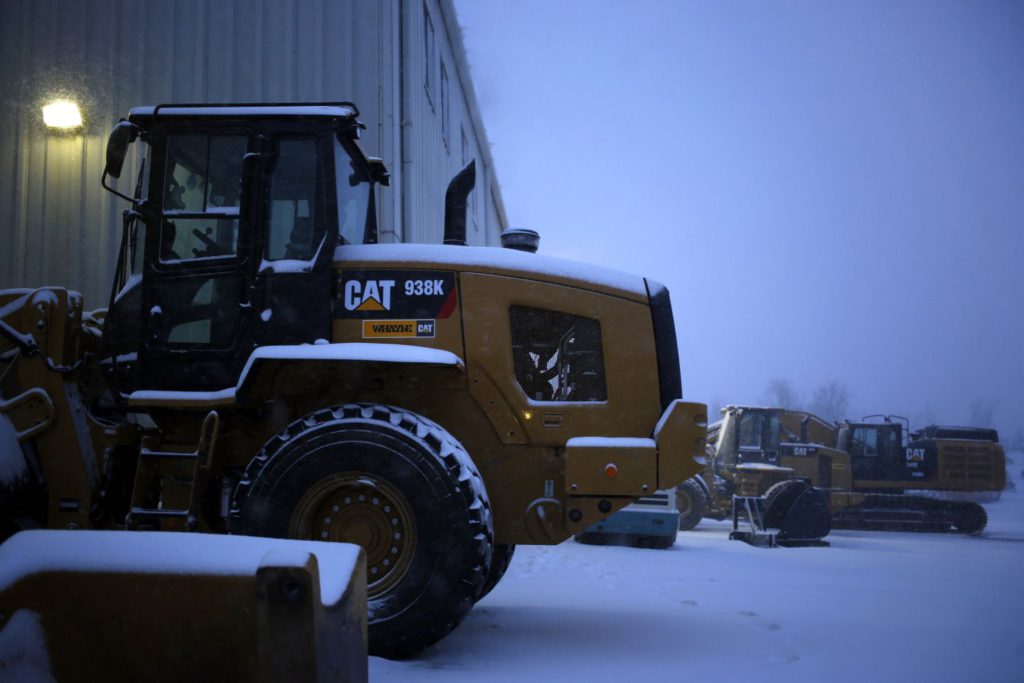
(Bloomberg) — Caterpillar Inc. is signaling to the market that demand from China is going to decline in 2022 and supply chain snarls will persist, despite machinery needs across most of the globe improving.
The company said sales of construction equipment in China slumped during the fourth quarter as end-user demand waned, and that profit margins are shrinking as costs related to supply-chain issues continue to add up. Chief Financial Officer Andrew Bonfield said the China drop will be driven mostly by a slowdown in the nation’s construction market, which could see benchmark sales of 10-ton-and-above excavators tumble 10% to 50%.
“Overall, the market was about flat in 2021, but obviously we do expect the market to decline in 2022 given the construction outlook,” Bonfield said in a phone interview. “There’s a range of forecasts out there — we look in the 10-ton and above excavator market — I think the range of forecasts out there are -10% to -50%, so it’s a very broad range. Your guess is as good as mine at the time.”
Shares fell 5.2% Friday in New York after the company reported fourth-quarter earnings. It was the biggest blue-chip laggard on the Dow Jones Industrial Average. Caterpillar said it raised prices to stay ahead of increasing raw-material costs and worked with suppliers to alleviate bottlenecks.
Chinese stocks extended a nearly $1.2 trillion rout this month as worries continued to mount over China’s growth and property market distress, which cast doubts over a swift turnaround. While investors do keep watch on Caterpillar’s business in the Asian nation, the country only represents about 5% to 10% of the company’s total business sales, Bonfield said.
Chief Executive Officer Jim Umpleby told analysts on a call that demand is strong across other regions, but that profit margins were lower than expected primarily because of freight costs, citing the need to sometimes ship parts by air rather than sea. He also attributed the shrinking margins to the decision to keep plants open and fully staffed to meet as much customer need as possible, even though supply shortages and blockages hinder Caterpillar’s ability to satisfy full demand.
“They can’t get what they need to serve strong demand, they have to pay more for what they get and have to expedite it with air freight because the ports are clogged,” Matt Arnold, a machinery analyst at Edward Jones, said in a phone interview.
“It’s a setback relative to expectations in terms of how fast margins can recover. Normally margins would be recovering much quicker than they are, but they aren’t due to the unique problems with the supply chain.”
Earlier this week, the Biden administration concluded that a global semiconductor shortage would persist until at least the second half of the year, indicating long-term strain on a range of U.S. businesses. Caterpillar’s machines require semiconductors to operate, and Umpleby said during the call the company hasn’t seen the shortages improve and that it’s difficult to predict when an improvement will occur.
(Updates shares in fourth graph. An earlier version of this story was corrected to amend Bonfield’s title in second paragraph.)
More stories like this are available on bloomberg.com
©2022 Bloomberg L.P.