(Bloomberg) — South Korea’s recovery remained on track last quarter as the economy expanded at a faster pace supported by firm export demand and a pickup in consumption during a lull in virus infections before the emergence of omicron.
Gross domestic product grew 1.1% in the October-to-December period from the prior three months, data from the Bank of Korea showed Tuesday. That was in line with economists forecasts.
From a year earlier, the economy expanded 4.1% in the fourth quarter, while annual growth in 2021 rose 4%, matching the Bank of Korea’s earlier forecast for the biggest gain since 2010.
The acceleration supports the central bank’s view that the overall economy is maintaining sufficient momentum as the BOK moves away from its emergency stimulus settings.
The bank has increased its benchmark rate three times since initiating a tightening cycle in August, and signaled it could hike borrowing costs further as inflation becomes a major concern.
Read more: Bank of Korea Flags More Rate Hikes to Come Over Inflation Fears
Exports have been the economy’s mainstay in 2021, with the nation’s shipments hitting a record value last year as global trade recovered from the pandemic and tech demand continued to soar. The data showed exports kept growing in the fourth quarter, expanding at a faster pace of 4.3%.
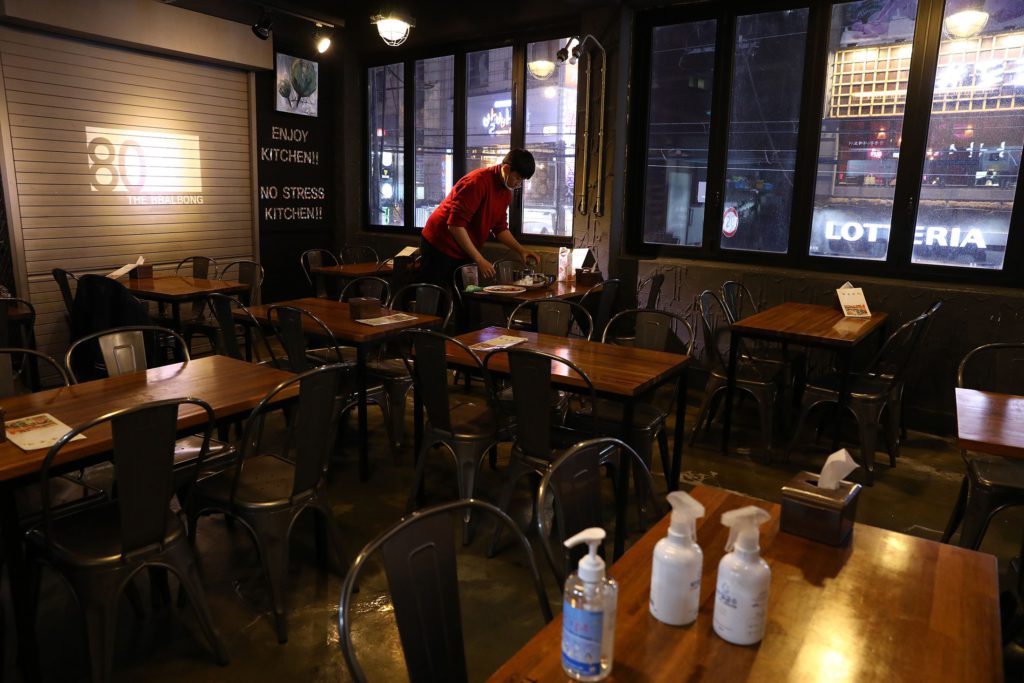
Private consumption also picked up, growing 1.7% in the last quarter as earlier restrictions were lifted and some pent-up domestic demand was released before omicron and a record surge of infections prompted renewed curbs on activity. Government spending was up 1.1%, while infrastructure investment fell 0.6%.
The government has since extended the tighter curbs twice in January, while easing the limit on private gatherings.
The renewed virus outbreak didn’t stop the central bank from raising the rate in its latest policy meeting earlier this month, but it has created fresh uncertainty over the outlook for the economy.
The government last week unveiled plans for a 14 trillion won extra budget to help smaller businesses get through the latest virus wave. Both the main candidates in March’s presidential election have called for even more spending support to shore up the recovery in light of renewed restrictions.
The BOK’s next policy meeting in February will be Governor Lee Ju-Yeol’s last. Lee has said a benchmark rate at 1.5%, a quarter percentage point above its current level, shouldn’t be considered policy tightening.
Still, many economists see the central bank waiting before it raises rates again as it monitors developments in the economy following its earlier policy moves.
The bank will also want to keep a close eye on the trajectory of the virus, the outcome of a looming presidential election and the aggressiveness of the Federal Reserve in tightening U.S. policy.
More stories like this are available on bloomberg.com
©2022 Bloomberg L.P.