
(Bloomberg) — Sign up for the New Economy Daily newsletter, follow us @economics and subscribe to our podcast.
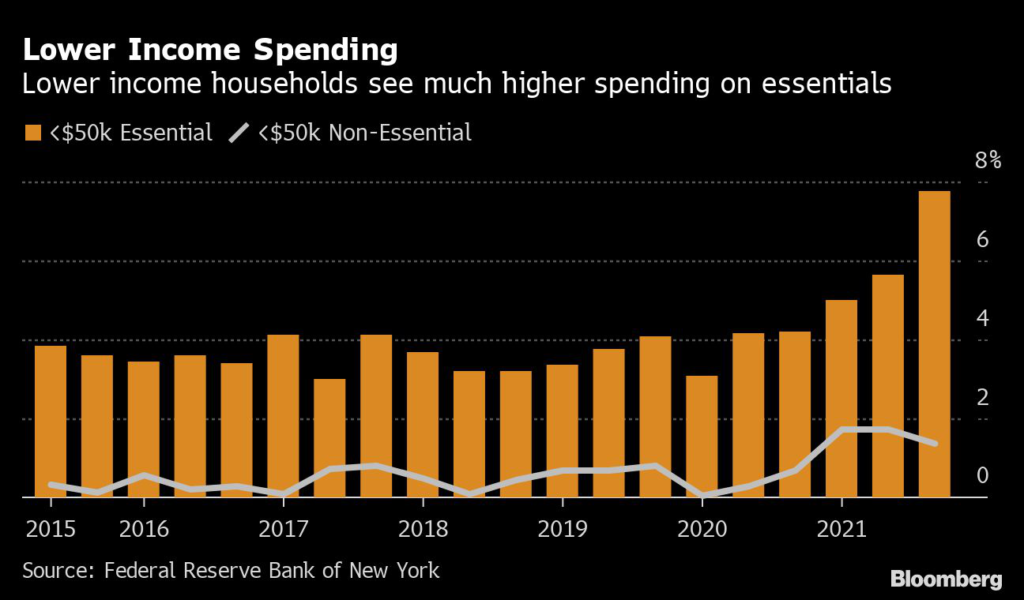
U.S. household spending on essential items rose to a record in the latest survey from Federal Reserve Bank of New York, as inflation forces lower-income families to direct a bigger portion of their budgets to everyday goods.
The share of households who reported large expenses such as home repairs, furniture and cars dropped, according to the December survey of consumer expectations. Looking ahead, the likelihood of making a big purchase over the next four months also declined.
Less than one-fifth of households expect to spend on vacations, down from 27.8% in August 2020. Two years ago, in pre-pandemic December 2019, 25.2% planned a vacation.
Omicron has spread rapidly across the U.S. since December, putting a damper on travel.
In spite of the virus and decades-high inflation, U.S. budgets remain in good shape. The share of loan balances that are more than 90 days delinquent is near historic lows.
And the median expected growth in monthly overall spending over the next year rose to 4.6% last month from 4.2% in August, its highest reading since the start of the series in August 2015. The increase was driven by those with a college degree that have been most able to keep their jobs and work remotely during the pandemic.
Spending on essential items such as food, housing, and utilities all reached new series highs in December, as did clothing and transportation.
The survey shows a record gap between what families plan to spend on must-have items versus nice-to-have ones in the coming year. It also shows that lower-income households are most likely to allocate more of their budgets on essentials.
More stories like this are available on bloomberg.com
©2022 Bloomberg L.P.