
(Bloomberg) — Chancellor Olaf Scholz agreed with regional leaders to keep Germany’s current pandemic restrictions in place to help tackle a record surge in infections while raising the possibility of relaxing some curbs once the wave subsides.
The country must “stay the course” on vaccinations and social-distancing restrictions, Scholz said Monday in Berlin after regular talks with the country’s 16 state premiers. “We need to continue to be cautious.”
Health Minister Karl Lauterbach has warned that there will likely be several hundred thousand new infections a day within the next few weeks, mirroring the surge in countries like France and Italy. The Harvard-educated epidemiologist expects the current wave to peak around mid-February. Germany’s testing labs, a mainstay of the country’s Covid response, are struggling to process the surge of PCR tests.
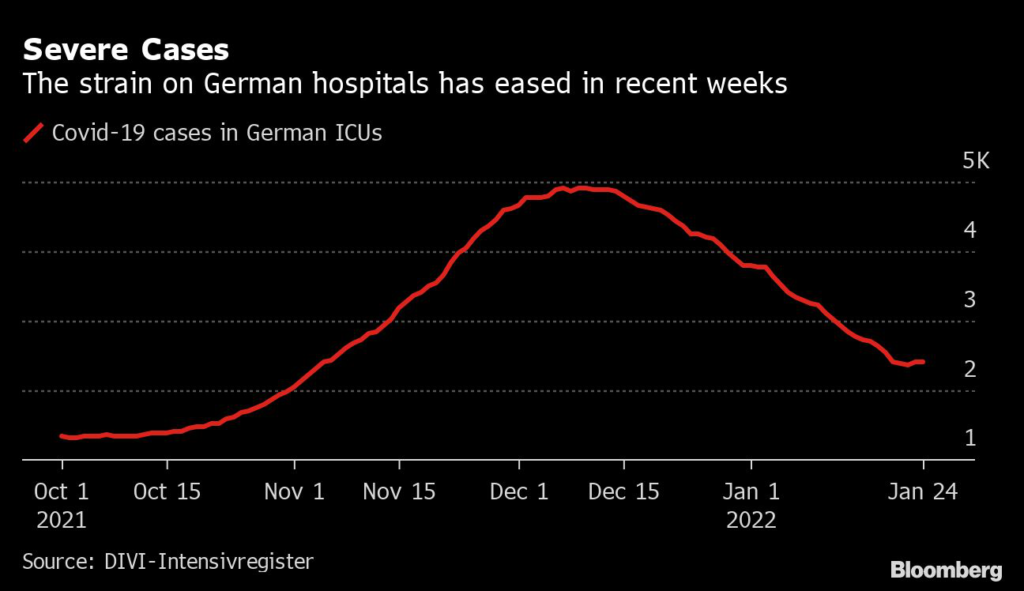
At the same time, there are signs that omicron is less deadly than other variants, even as Covid cases in German ICUs have started inching up again after falling steadily for more than a month. Any easing of restrictions should only take place when there’s no risk of hospitals of becoming overcrowded, said Hendrik Wuest, the premier of the state of North Rhine-Westphalia.
Along with measures to reduce social contacts, the government is also trying to speed up its relatively sluggish vaccination campaign.
As of Monday, at least 73.4% of the population was fully vaccinated with two doses and just over half had received a booster, according to government data.
Lawmakers in the Bundestag are due on Wednesday to hold a debate on possibly introducing a vaccine mandate that could potentially stay in place for a year or two and impose fines on any adult who refuses to be inoculated.
Scholz has backed a mandate, and Lauterbach argues that it’s needed to avert another wave of infections in the fall. He has indicated it could come into effect as early as April once a bill has been approved by parliament.
The next meeting between the federal and state governments on the pandemic is scheduled for Feb. 16. By then, Germany will probably have reached the peak of the omicron wave, Scholz said.
More stories like this are available on bloomberg.com
©2022 Bloomberg L.P.