
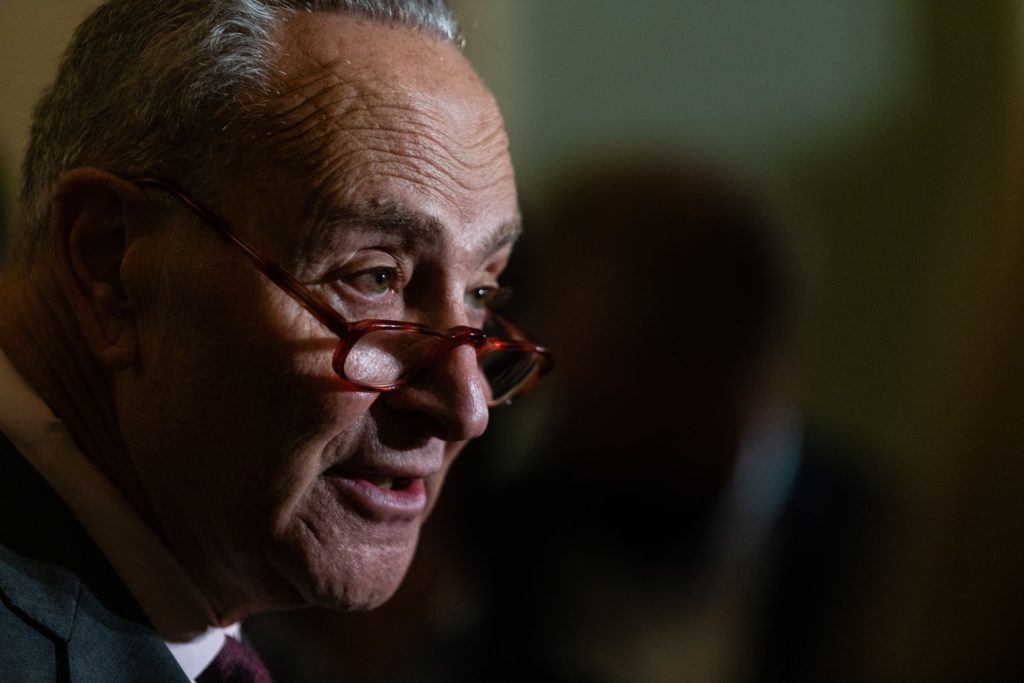
(Bloomberg) — Senate Majority Leader Chuck Schumer plans to break a logjam on two voting rights bills and begin debate this week, but Republicans could still block a final vote on the measure.
He plans to use a procedural gambit to prevent Republicans from blocking the beginning of debate. The House will first pass legislation that incorporates two bills that was held up in the evenly divided Senate in 2021 and then send them to the Senate, which can use the legislation to bypass the typical 60-vote threshold to proceed.
Schumer pointed out Republicans can still scuttle it later before a vote on final passage.
“With this procedure, we will finally have an opportunity to debate voting rights legislation – something that Republicans have thus far denied,” Schumer said in a memo to Democrats that was obtained by Bloomberg News. “Of course, to ultimately end debate and pass the voting rights legislation, we will need 10 Republicans to join us – which we know from past experience will not happen – or we will need to change the Senate rules as has been done many times before.”
President Joe Biden will go to Capitol Hill on Thursday to step up pressure on Democrats to change the filibuster rules to enable passage of voting legislation.
A White House official said Biden is focusing on “the urgent need” to pass the voting-rights bills in the face of persistent attacks on the integrity of U.S. elections through false claims by former President Donald Trump that the 2020 presidential result was fraudulent.
Biden’s Capitol visit will come two days after he traveled to Georgia to rally support for the legislation and amid growing backlash from party allies who say he’s not doing enough.
Biden and Senate Democratic leaders are seeking to pressure reluctant Senate Democrats — including West Virginia’s Joe Manchin and Arizona’s Kyrsten Sinema — to change Senate filibuster rules so that the voting rights legislation could clear the chamber on a simple majority vote. It takes 60 votes to end a filibuster — essentially endless debate — and move forward on most legislation.
More stories like this are available on bloomberg.com
©2022 Bloomberg L.P.