
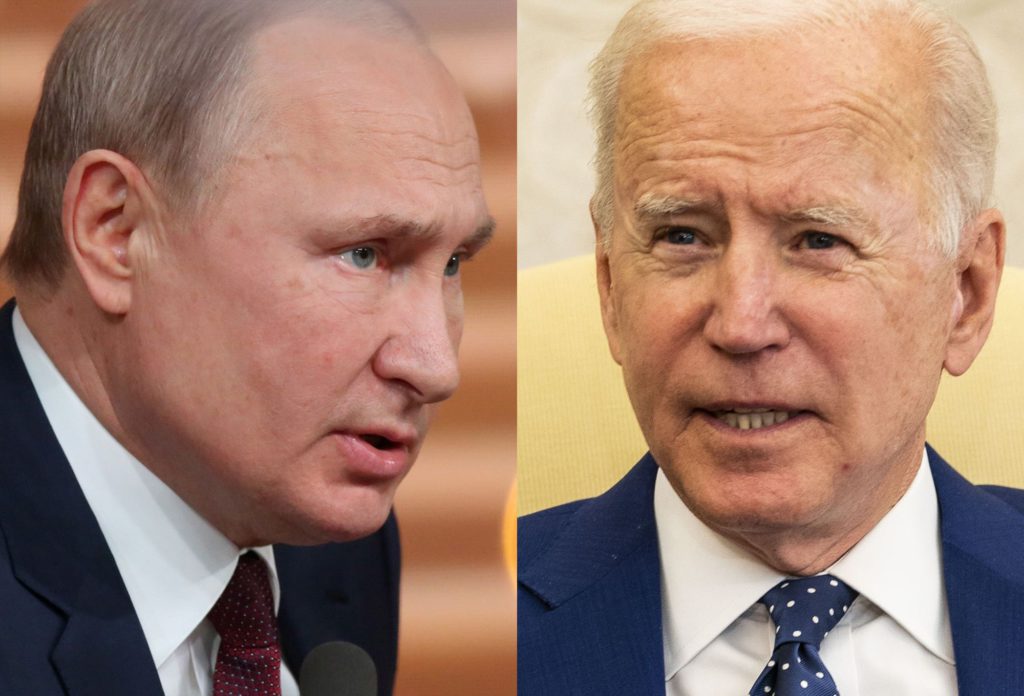
(Bloomberg) — U.S. President Joe Biden and Russian President Vladimir Putin have begun a phone conversation Thursday as the U.S. and its allies raise alarm over a potential Russian invasion of Ukraine.
The call began at 3:35 p.m. Washington time, close to the planned starting time of 3:30 p.m. in Washington and 11:30 p.m. in Moscow, according to a U.S. official who spoke on condition of anonymity.
Putin sought the call — which Biden took from his home in Wilmington, Delaware, where he’s vacationing — as a prelude to negotiations on European security at the start of the year, the Kremlin said.
The talks follow a Dec. 7 Biden-Putin video call in which the American president affirmed a commitment to Ukraine’s sovereignty and territorial integrity and warned that Russian aggression would be met with unprecedented economic penalties.
The U.S. has told European allies that the massive Russian military presence near Ukraine might be preparation for an invasion as early as next month before the frozen terrain turns to mud in spring.
The Kremlin denies any intention to invade its neighbor, while also demanding security guarantees from the West that include a ban on eventual expansion of the North Atlantic Treaty Organization to encompass former Soviet states such as Ukraine and Georgia and the withdrawal of NATO forces in Europe to positions they held in 1997. American officials and NATO allies have described those conditions as non-starters.
A senior U.S. official said Wednesday that a successful conversation can take place only if there’s de-escalation at the Ukraine border. But Biden agreed to take part because he believes in leader-to-leader diplomacy and that the situation demands discussions between the two presidents, the official said.
The Thursday talks will go beyond Ukraine to include other issues, including arms control, the official said.
The two sides are committed to entering 2022 with a rush of high-stakes diplomacy after Russia published draft security treaties following a call between the leaders earlier this month. U.S. and Russian negotiators will meet Jan. 10, two days before a NATO-Russia Council meeting. Top advisers to Putin and German Chancellor Olaf Scholz also plan to meet before the NATO-Russia talks.
European leaders have been largely reduced to spectators so far as the U.S. and Russia have bargained over the parameters of talks on the continent’s security.
The U.S. and its allies have threatened Moscow with harsh economic reprisals if its troops march into Ukraine, but those warnings show that the West, at this point, is only willing to go so far. There’s no talk of sending their own troops into Ukraine.
Despite the U.S. decision to engage in one-on-one talks between Biden and Putin, American officials have repeatedly insisted they will make no deals that short-change the concerns of Ukraine and the European allies. Secretary of State Antony Blinken called Ukraine’s President Volodymyr Zelenskiy Wednesday and said in a tweet that he reaffirmed “full U.S. support for Ukraine.”
State Department spokesman Ned Price repeated on Tuesday what’s becoming the standard U.S. response to concern that the Biden administration may cut its own deal with Russia while shortchanging the concerns of Ukraine and European allies. “The principle is inviolable — nothing about them without them,” he said.
The crisis is a repeat of one in the spring, when Putin also massed forces near the border with Ukraine before backing down in April after Biden in a call offered a summit meeting that took place in June.
More stories like this are available on bloomberg.com
©2021 Bloomberg L.P.