
(Bloomberg) — United Airlines Holdings Inc. and Delta Air Lines Inc. are canceling around 200 Friday flights, the day before Christmas, because of personnel shortages linked to the spike in omicron Covid-19 cases.
The Hong Kong government said an airport cleaner with no recent travel history has tested preliminary positive for Covid and is suspected to carry the omicron variant. The city, where previous imported cases of omicron all had prior travel history, will roll out booster vaccinations for people above 18 who have received a second shot six months ago, starting from Jan. 1.
Merck & Co.’s Covid-19 pill was cleared by U.S. regulators, the second new treatment option approved in as many days in an expanding arsenal to fight the pandemic. But just like testing sites and vaccines, treatment pills will be in short supply for months until production can increase.
Key Developments:
- Virus Tracker: Cases pass 278 million; deaths top 5.38 million
- Vaccine Tracker: More than 8.8 billion shots given
- Covid Pill Availability May Depend on Which State You Live In
- The Quest for a Disposable Mask That Won’t Pollute
- All you need to know about rapid test kits
- What we know about omicron, the new virus variant: QuickTake
Taiwan Reports 11 Omicron Cases; Lab Fined (2:33 p.m. HK)
Separately, Taiwan added 11 imported omicron cases Friday, bringing the total to 27.
The government fined Academia Sinica due to its loose oversight over internal biosafety procedures led to a Covid-19 lab infection case, according to a statement from Taiwan Centers for Disease Control.
An initial investigation showed that lab workers didn’t put on equipment such as N95 masks and double glove layers as required, and didn’t follow standard operation procedures when wearing and taking off personal protective equipment.
China Booster Stimulates Antibodies (1:18 p.m. HK)
A booster shot, either in the form of inactivated vaccine or protein subunit vaccine, can still generate neutralizing antibodies against omicron, though the levels are significantly lower compared to protection against the virus’ original strain and delta, according to a study conducted by researchers from China’s National Medical Center for Infectious Diseases.
The inactivated vaccine used in the study is the one developed by China’s Sinopharm while the protein subunit shot is developed by Chongqing Zhifei Biological Products Co., according to the study.
South Africa Ends Quarantines (1:08 p.m. HK)
South Africa will stop contract tracing and won’t quarantine people as it shifts focus on Covid-19 mitigation strategies, given that as much as 80% of the nation’s population has past infections providing some immunity.
Authorities in Africa’s most-industrialized nation will conduct contract tracing only in cases of cluster outbreaks, the nation’s Director General of Health said in a circular dated Thursday, which was confirmed by department spokesman, Foster Mohale.
Hong Kong Boosters for All Adults (12:46 p.m. HK)
Particular groups ssuch as those with travel needs can receive booster at least three months after the second shot, the government said.
Hong Kong will also extend opening hours for nine community vaccination centers.
United, Delta Cancels Flights (11:02 a.m. HK)
The jump in cases is affecting the availability of flight crews and ground personnel on the day before Christmas, United Airlines said.
“We’ve unfortunately had to cancel some flights and are notifying impacted customers in advance of them coming to the airport,” United said.
The holidays are among the heaviest times for travel. The Transportation Security Administration was estimating Dec. 22 and 23 would be the busiest pre-Christmas travel dates nationally and locally, with Jan. 2 and 3 as the most-crowded for post-holiday travel.
Delta said its cancellations were due to a combination of reasons, including but not limited to potential inclement weather in some places and the impact of omicron.
China Officials Punished for Improper Covid Handling (9:43 a.m. HK)
Authorities in northwestern Chinese city of Xi’an punished 26 officials responsible for ineffective work in Covid-19 curbs, China’s top anti-graft agency said in a statement, after the city was locked down amid coronavirus flare-up.
Covid Pills Seen Scarce (8:40 a.m. HK)
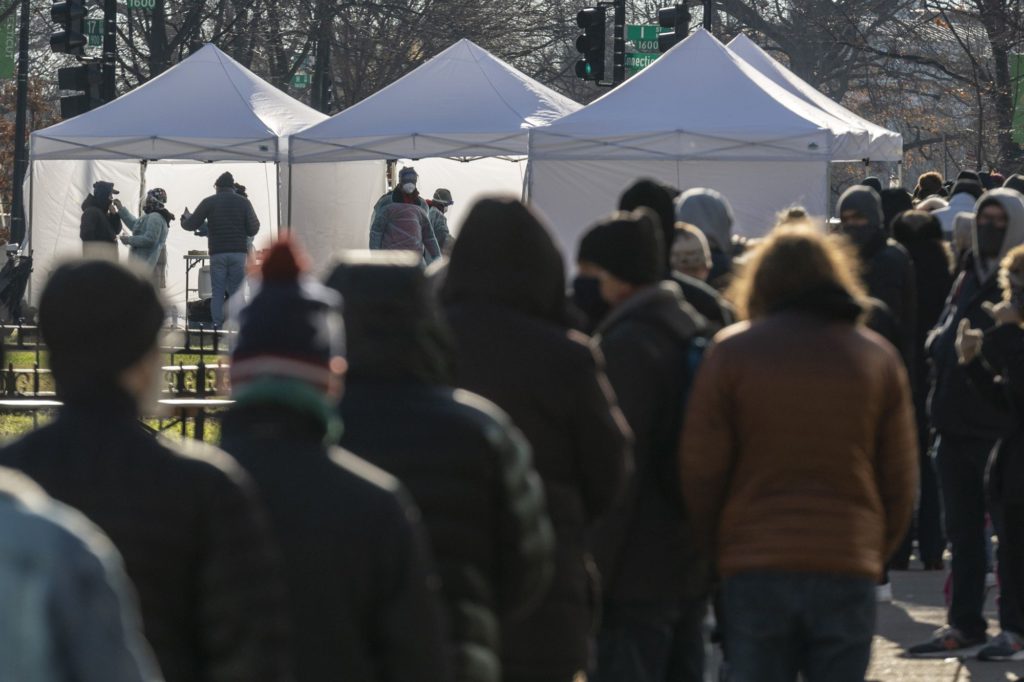
Just like Covid-19 testing sites and vaccines, Covid-19 treatment pills in the U.S. will be in short supply for months until production can increase.
The federal distribution to states will be based on population, and it will likely be up to doctors to prescribe Pfizer Inc.’s Paxlovid. The National Institutes of Health said it will release recommendations on how to allocate treatments.
Germany Issues Pandemic Warning (7 a.m. HK)
“The pandemic won’t suddenly be gone one day,” President Frank-Walter Steinmeier said in the text of a speech to be delivered on Saturday. “It will occupy us for a long time to come.”
On Thursday, Germany reported almost 3,200 confirmed and suspected cases of the Covid strain after the number tripled last week, according to the RKI public-health institute.
Australia Speeds Up Boosters (5:55 p.m. NY)
Australia has brought forward implementing third-dose booster shots for Covid-19 as the nation battles outbreaks of the omicron variant.
From Jan. 4, Australians will be be able to get their booster shot four months after receiving their second dose, from five months currently, Health Minister Greg Hunt said in Canberra. From Jan. 31, the time limit will be cut again to three months.
“These dates have been set out of an abundance of caution to give Australians early continued protection,” Hunt said. About 91% of Australians aged 16 and over have had two jabs, he said.
Hong Kong Finds Suspected Omicron Case (5:30 p.m. NY)
The Hong Kong government said a 64-year-old male airport restroom cleaner has tested preliminary positive for Covid-19 and is suspected to carry the omicron variant.
The patient had no recent travel history and mainly worked at a designated restroom used by preliminary positive imported case patients while they await transfer to the hospital, the Center for Health Protection said in a statement. Hong Kong has so far confirmed 34 imported omicron cases, and all had prior travel history.
Intel, Google to Pull Out of CES (5:25 p.m. NY)
Google and General Motors Co. joined Intel Corp., the world’s largest chipmaker, and Alphabet Inc.’s autonomous driving unit, Waymo, in pulling out of in-person presentations at the CES technology conference scheduled for next month.
In a blog post on Thursday, Waymo cited “quickly rising Covid-19 infection rates” but said its executives would participate in virtual events. Similarly, Intel said it will send only a small number of staff to the Las Vegas event and switch its participation to the internet.
An executive board member of Porsche AG, Barbara Frenkel, also canceled her plans to attend the conference scheduled to begin Jan. 5.
New York Cases Continue to Climb (4 p.m. NY)
New York’s daily Covid-19 cases rose to 38,835 on Thursday — nearly doubling in less than a week when the state broke the previous record of 19,942 new cases set in January, according to state data.
Of the 324,786 people who were tested, 12% were positive as the omicron variant washes over the state. Omicron comprised 62% of sequenced cases from New York between Dec. 9 and Dec. 22.
Hospitalizations aren’t rising as fast as cases but they are starting to climb steadily. Hospitalizations increased by 18% to 4,534 over the last week. Deaths have remained steady with about 60 New Yorkers dying from Covid per day.
NYC to Limit Crowds for New Year’s Eve (2:20 p.m. NY)
New York City is limiting crowds and adding more health and safety measures for revelers at the New Year’s Eve ball drop in Times Square amid a record surge of Covid-19 cases.
Mayor Bill de Blasio said the celebration will still be held but only allow 15,000 people in viewing areas. The city will require proof of full vaccination and mask-wearing.
Still, the mayor declined to cancel the event altogether, citing vaccination requirements to attend, the outdoor nature of the event and the precautions taken as adequate safety measures.
Omicron Hospital Risk as Much as 70% Lower (12:01 p.m. NY)
Omicron appears to be less severe but more contagious than any other Covid-19 strain to date, the U.K. government said, as daily infections soared to another new record close to 120,000.
An individual with omicron is 50% to 70% less likely to be admitted to hospital, compared with the delta strain, the U.K. Health Security Agency said Thursday. They are also between 31% and 45% less likely to attend emergency departments with omicron than with delta.
However, data from the HSA also showed that while a booster improves protection, it starts to wane more rapidly than with delta, and is 15% to 25% lower from 10 weeks after the third dose.
New Wave Taking Hold in U.S. (11:00 a.m. NY)
Another wave of Covid infections is taking hold in the U.S., powered by the fast-spreading omicron variant. On Wednesday, daily cases topped 250,000 for the second time this week, data compiled by Johns Hopkins University and Bloomberg show.
Even so, the hospitalization rate in the nation has been relatively stable in recent days. Preliminary studies from overseas show omicron may be less likely to land patients in the hospital than the delta strain.
Merck Pill Gets U.S. Clearance (9:23 a.m. NY)
Merck & Co.’s Covid-19 pill was cleared by U.S. regulators, giving high-risk patients another at-home treatment option at a time when the omicron variant is causing cases to surge.
The drug, molnupiravir, received emergency authorization on the heels of Pfizer Inc.’s competing pill that was cleared Wednesday, Paxlovid. Together, the treatments promise to provide a new way to keep a sharp rise in infections from overwhelming U.S. hospitals.
Molnupiravir, developed by Merck with partner Ridgeback Biotherapeutics LP, is intended to treat Covid in non-hospitalized people 18 and older at risk of developing severe illness. A study showed it reduced the risk of hospitalization or death among adults with mild to moderate disease by 30%.
More stories like this are available on bloomberg.com
©2021 Bloomberg L.P.