
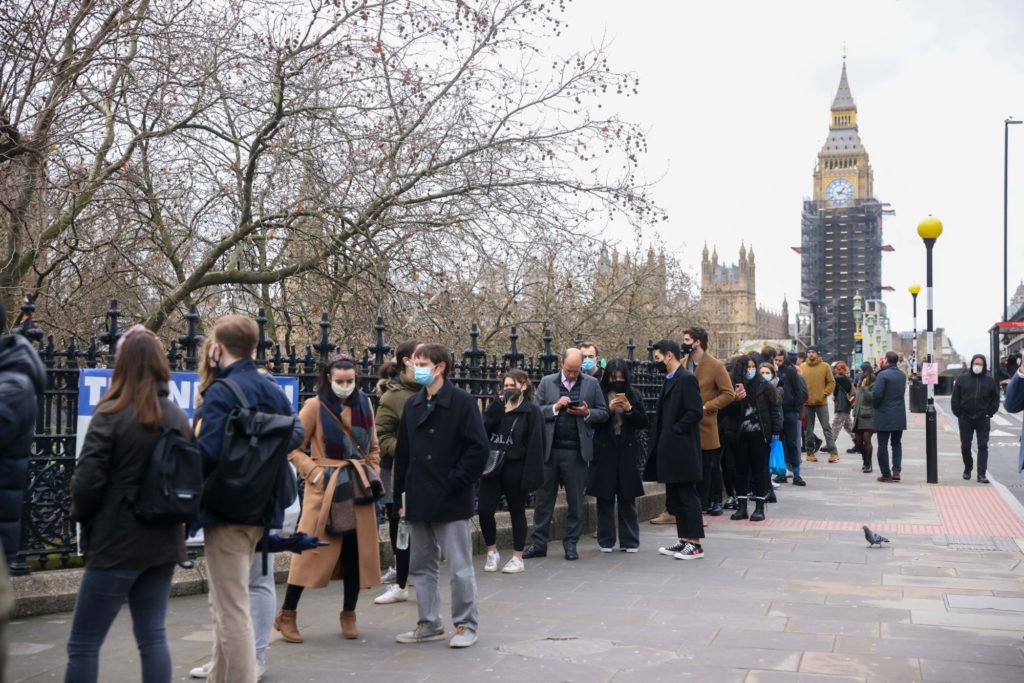
(Bloomberg) — Boris Johnson urged Britons to take care at Christmas, as he considers whether to tighten pandemic regulations next week amid a record surge in Covid-19 cases fueled by the fast-spreading omicron variant.
A total of 119,789 new Covid-19 cases were logged on Thursday, according to data published on the government’s coronavirus dashboard. That’s more than double the rate seen at the start of the month, and an increase of more than 10,000 on Wednesday’s caseload — which had also been a daily record.
Johnson has already introduced new light-touch restrictions to try to limit the spread of omicron. The prime minister has said he won’t do more before Christmas, but has warned further measures are possible after the holiday. Doing so would likely anger rebels in his ruling Conservative Party.
“We must test ourselves and take extra care when meeting elderly or vulnerable relatives,” Johnson said Friday in his Christmas message to the nation, in which he also urged people to get their vaccine boosters. “We know that things remain difficult.”
While the administrations in Scotland, Wales and Northern Ireland have already detailed new curbs that will come in after Christmas, Johnson doesn’t plan any announcements until after Dec. 25.
But the steep rise infections will add weight to the argument of his scientific advisers, who say the sooner he clamps down on household mixing and indoor hospitality, the more he can ease pressure on the National Health Service.
In more positive news, the U.K. Health Security Agency reported Thursday that patients with omicron are 50% to 70% less likely to be hospitalized, compared with the previously dominant delta strain.
Still, the agency warned the highly infectious nature of the variant could still lead to significant numbers of severe illness that squeeze the health service. It also said data showed that the effectiveness of booster vaccines wanes more rapidly against omicron than delta.
While the findings offer a “glimmer of Christmas hope,” there’s still not enough data to downgrade the level of threat, Jenny Harries, the agency’s chief executive officer, told BBC radio on Friday.
“Critically what we’re seeing is omicron largely in young people and it’s only just now that cases are starting to tip over into the older population,” she said. “I don’t think we do know yet that this is going to be a significantly less serious disease for the older population that we’re normally most concerned about.”
(Updates with Harries comments in final two paragraphs)
More stories like this are available on bloomberg.com
©2021 Bloomberg L.P.